Search engines like Google are often the first place people go when they’re looking for a product or service, which is why investing in strong search engine optimisation is so important. But for your website to appear in search results, search engines need to be able to find it, understand it, and decide where it belongs.
Here’s a simple breakdown of how search engines find and rank your website, without the technical jargon.
1. How Search Engines Find Your Website
Search engines use automated tools, often called crawlers or bots, to discover websites. These crawlers move from one page to another by following links across the internet.
Your website can be discovered through:
- Links from other websites
- Links between pages on your own site
- A sitemap you’ve submitted
- New or recently updated content
If a page doesn’t have any links pointing to it, search engines may have a harder time finding it.
2. Crawling and Indexing Your Pages
Once a search engine finds your website, it looks through your pages to understand what each one is about. This process is called crawling.
After that, the page may be added to the search engine’s index, a large database of web pages. Only pages that are indexed can appear in search results.
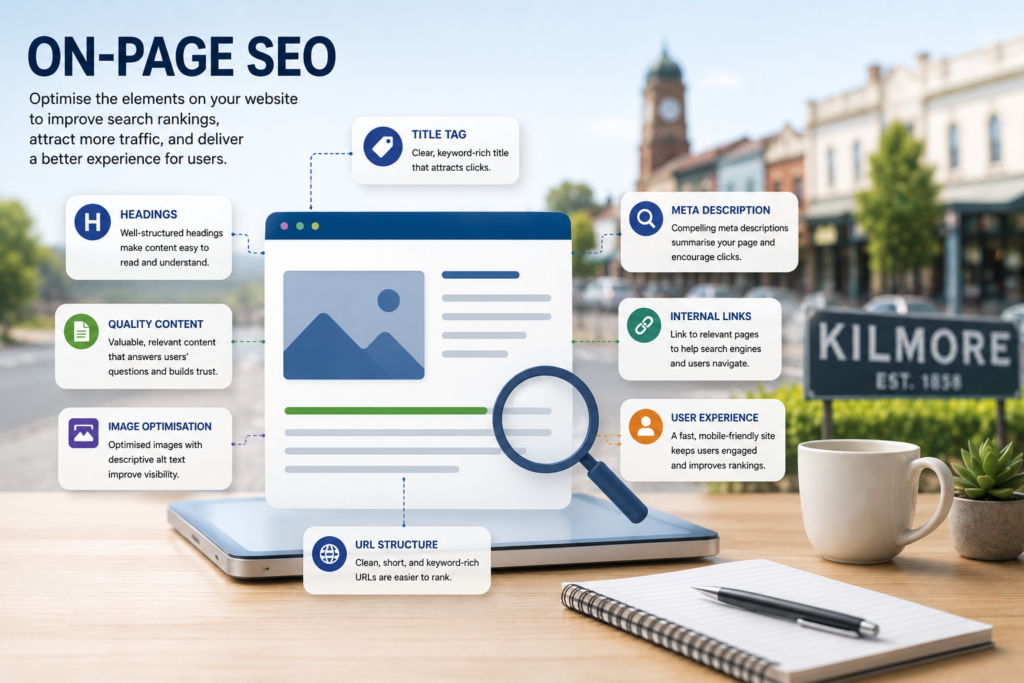
Having a clear page structure, proper headings, and well-written content helps search engines understand your pages more easily.
3. Understanding What Your Page Is About
Search engines look at different parts of your page to understand what it’s about, including:
- Page titles
- Headings
- Body text
- Image alt text
These elements help search engines figure out the main topics of your page and decide which searches it may be relevant for.
4. How Search Engines Decide Rankings
Once your page is indexed, search engines look at many factors to decide where it should appear in search results.
Some key factors include:
- How relevant the page is to the search query
- The quality and usefulness of the content
- Website speed and overall performance
- Mobile friendliness
- Security, such as having an SSL certificate
The goal is to show users the most helpful, reliable, and relevant results first.
5. The Role of User Experience
Search engines also consider how people interact with your website.
Signals such as:
- How long visitors stay on a page
- Whether they visit other pages on your site
- How quickly they leave
help search engines understand whether your site is useful and engaging. Over time, websites that are clear, easy to use, and helpful tend to perform better in search results.
6. Why Content Matters
Fresh, helpful content shows search engines that your website is active and relevant.
Regularly updating your site with:
- Informative blog posts
- Updated service pages
- Clear answers to common questions
can improve your visibility in search results and help support stronger rankings over time.
7. Authority and Trust
Search engines also consider how trustworthy your website appears. This is influenced by factors such as:
- Links from reputable websites
- Clear and accurate business information
- Consistent branding and messaging
Building authority and trust takes time, but it plays an important role in long-term search performance. Showcasing real examples of your work can also help build credibility.
Final Thoughts
Search engines find and rank websites by discovering content, understanding how pages are structured, and evaluating how useful and trustworthy a site appears.
By focusing on clear content, good website structure, and a positive user experience, you give your website the best chance to perform well in search results.
If you’d like help improving your website’s visibility or understanding how search engines view your site, feel free to get in touch via our contact form. We’re always happy to help.