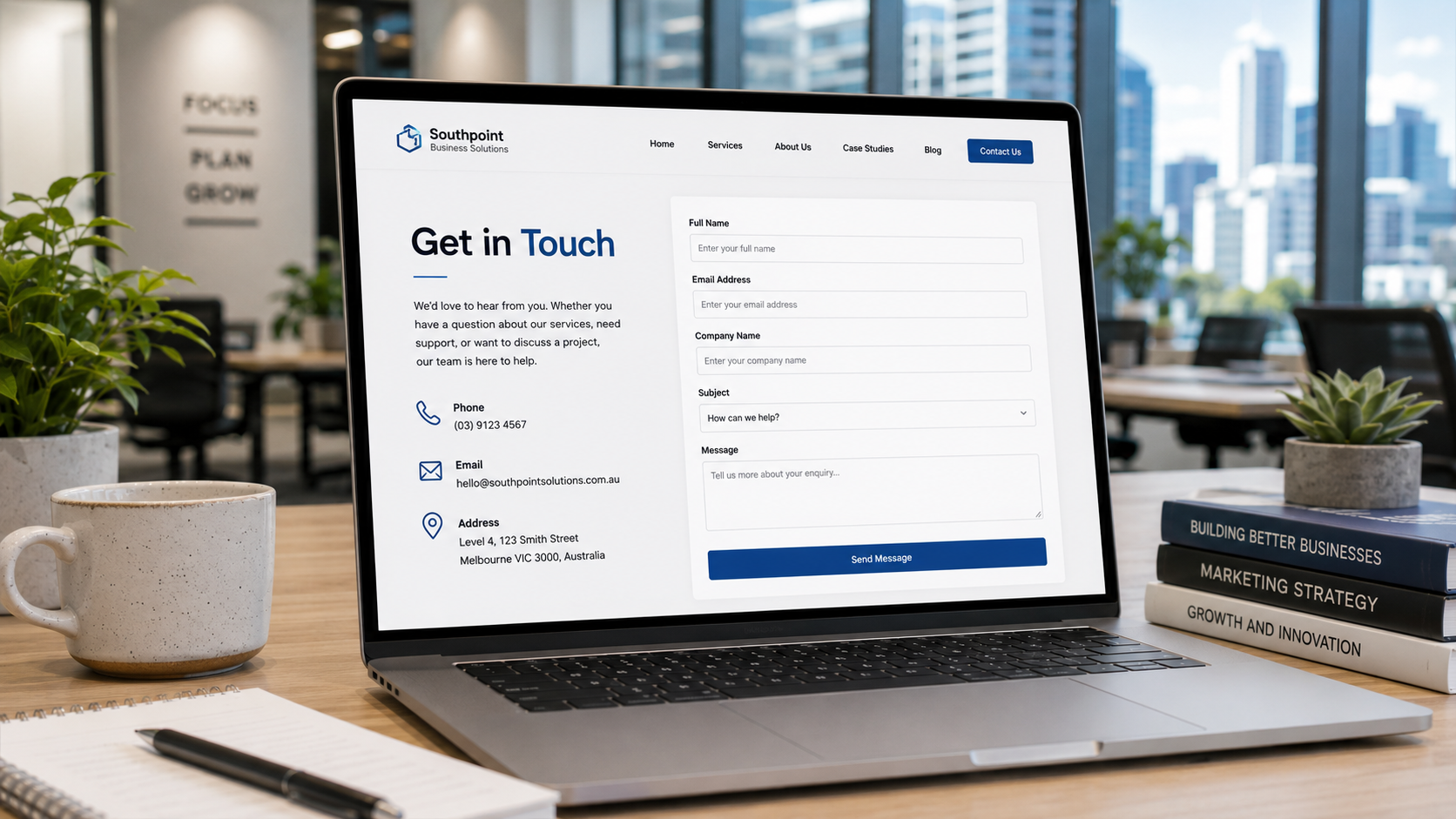
A contact form is often one of the final steps between a website visitor and a potential customer. While businesses invest heavily in attracting traffic through SEO, Google Ads, and social media, generating enquiries depends on how effectively visitors are guided towards taking action.
This is where contact form optimisation becomes important. The number of fields, the information requested, and the overall user experience can all influence whether a visitor completes an enquiry or leaves the website without making contact. As part of effective website design and development services, contact forms should help reduce friction while collecting the information needed to support business goals.
However, there is no single approach that works for every business. Some organisations benefit from shorter forms that encourage more enquiries, while others require additional fields to help qualify leads. Understanding this balance can help businesses improve both the quantity and quality of enquiries generated through their website.
Why Contact Forms Have a Bigger Impact Than Many Businesses Realise
Many businesses focus on increasing website traffic. They invest in SEO, paid advertising, content marketing, and social media campaigns to attract potential customers. While these efforts are important, traffic alone does not generate enquiries.
At some point, visitors need to take action.
For many businesses, this action involves completing a contact form. Whether someone is requesting a quote, booking a consultation, asking a question, or expressing interest in a service, the contact form often serves as the gateway between interest and engagement.
Because contact forms appear near the end of the customer journey, even small issues can have a significant impact on conversion rates. If a form feels complicated, time-consuming, or unnecessary, visitors may abandon the process altogether.
This helps explain why some businesses receive website traffic but struggle to generate enquiries. The problem is not always visibility. In some cases, the issue lies in the experience visitors encounter when they are ready to make contact.
Businesses facing this challenge may benefit from reviewing the factors discussed in our guide to turning website traffic into enquiries, which explores common reasons websites fail to convert visitors into leads.
The reality is that every field included in a form asks visitors to invest additional time and effort. While this may seem insignificant, these small moments of friction can influence whether someone decides to complete the enquiry process.
Why Simpler Contact Forms Often Generate More Enquiries
One of the key principles of contact form optimisation is reducing unnecessary friction. Every field within a form requires visitors to stop, think, and provide information. As the amount of information requested increases, so does the effort required to complete the enquiry process.
For businesses focused on generating a higher volume of enquiries, simplicity often delivers better results. A shorter contact form can make it easier for potential customers to take action, particularly when they are still in the early stages of researching their options.
For example, a childcare centre may need only enough information to arrange a tour or answer a parent’s initial questions. Similarly, a trades business may simply require contact details and a brief description of the work required before providing a quote. In both cases, requesting excessive information too early can create unnecessary barriers and discourage potential customers from getting in touch.
This principle can also apply to medical practices, real estate agencies, and many local service businesses where convenience plays an important role in the customer experience. The easier it is to submit an enquiry, the more likely visitors are to take the next step.
Research into conversion form best practices suggests that reducing unnecessary questions can improve completion rates by making forms feel faster and easier to complete. While every business has different requirements, asking only for information that is genuinely needed at the initial enquiry stage can help reduce friction and encourage more submissions.
However, generating more enquiries is not always the primary objective. For some businesses, collecting additional information can improve lead quality and streamline the sales process.
When More Form Fields Can Improve Lead Quality
While shorter forms often increase enquiry volume, more enquiries are not always better.
For some businesses, lead quality is equally important.
Organisations offering specialised, complex, or high-value services often need more information before determining whether a prospect is a suitable fit. In these situations, additional form fields can help qualify leads before a conversation takes place.
An accounting firm provides a good example. If an accounting practice receives a large number of enquiries from businesses that fall outside its target market, valuable time can be spent responding to prospects that are unlikely to become clients. Adding fields that capture information such as business size, industry, or service requirements can help improve lead quality.
The same principle can apply across a range of industries. A childcare centre may choose to ask for a child’s age group because it helps determine availability and suitability before arranging a tour. Similarly, a professional services business may request information about project requirements or objectives before scheduling an initial consultation.
Marketing agencies frequently face similar challenges. Understanding a prospect’s objectives, current marketing activities, budget range, or project requirements can provide useful context before a consultation. Professional consultants, legal firms, and B2B service providers often benefit from collecting additional information for the same reason.
In these situations, the purpose of the form extends beyond generating enquiries. It becomes a lead qualification tool.
Research into lead generation best practices highlights the importance of balancing accessibility with relevance. Businesses need enough information to determine whether a lead is worth pursuing without making the process unnecessarily difficult.
Additional fields may be justified when they:
- Improve lead qualification
- Reduce time spent on unsuitable enquiries
- Support a more efficient sales process
- Provide information that is genuinely required before the next step
The goal is not to collect more information for the sake of it. Every question should serve a purpose and contribute to a better understanding of the prospect’s needs. If a field does not support qualification, communication, or decision-making, it may not belong in the form.
Finding The Right Balance Between Lead Volume And Lead Quality
The most effective contact forms are designed around business objectives.
There is no universal rule that determines how many fields a contact form should contain. The ideal approach depends on the goals of the business and the expectations of its audience.
A childcare centre looking to increase tour bookings may prioritise enquiry volume. The easier it is for parents to make contact, the more opportunities the centre has to start conversations and build relationships.
An accounting firm may prioritise lead quality. Fewer enquiries may be acceptable if those enquiries are more likely to become clients.
A trades business may focus on speed and convenience, while a professional services firm may need additional information to support a more consultative sales process.
Neither approach is inherently better.
The challenge is finding the balance between gathering useful information and maintaining a positive user experience.
Businesses that prioritise lead volume above everything else may become overwhelmed with low-quality enquiries. While a shorter form can increase the number of submissions, it can also result in more time being spent responding to prospects who are unlikely to become customers. This can place additional pressure on internal teams and reduce overall efficiency.
Conversely, businesses that request too much information risk losing legitimate opportunities before a conversation even begins. Even highly interested prospects may abandon a form if it feels unnecessarily long or asks for information they are not yet ready to provide.
The most successful contact forms typically collect the minimum amount of information required to move prospects to the next stage of the sales process. Rather than trying to maximise either lead volume or lead quality, businesses should focus on finding an approach that supports both their customer experience and commercial objectives.
Businesses looking to generate more enquiries may also benefit from exploring additional lead generation strategies, particularly when contact form optimisation is being combined with broader website and marketing improvements.
When evaluating a contact form, businesses should consider questions such as:
- What information is absolutely necessary?
- What information can be collected later?
- Does each field support a business objective?
- Is the form aligned with customer expectations?
- Could any fields be removed without affecting lead quality?
Answering these questions often reveals opportunities for improvement and helps businesses create contact forms that support long-term growth rather than simply increasing the number of submissions
Contact Forms Are Only One Part Of The Conversion Journey
Although contact forms are important, they are only one component of a successful conversion strategy.
Visitors rarely decide whether to enquire based solely on a form. Their decision is influenced by many other factors throughout the website experience.
These may include:
- Website design
- Messaging
- Navigation
- Trust signals
- Testimonials
- Calls to action
- Content quality
- Page speed
Even a perfectly optimised contact form will struggle to perform if the rest of the website fails to build trust or communicate value.
Trust plays a particularly important role in conversion performance. Visitors are more likely to submit an enquiry when they can easily find customer reviews, testimonials, case studies, and clear information about the business. If these elements are missing, potential customers may hesitate to take the next step regardless of how well a contact form is designed.
This is why businesses should view contact form optimisation as part of a broader conversion strategy rather than an isolated tactic. Improving enquiry rates often requires evaluating the entire customer journey, from the moment a visitor lands on a website through to the point they make contact.
Businesses looking to improve overall conversion performance may also benefit from reviewing our guide to conversion-focused homepage design, which explores how website structure, messaging, and calls to action can influence user behaviour and decision-making.
The most effective websites guide visitors smoothly from initial interest through to enquiry, with each element supporting the next step in the journey.
Learning From Real-World Examples
One of the reasons there is no perfect contact form is that every business is different.
A local trades business may see significant improvements simply by reducing the number of required fields and making it easier for customers to request a quote.
A childcare centre may benefit from simplifying its enquiry process to encourage more tour bookings.
An accounting firm may achieve better results by collecting additional information that helps qualify potential clients.
A professional services business may find that a longer form reduces enquiry volume but significantly improves lead quality.
These examples demonstrate an important point: successful contact form optimisation is not about following a generic formula. It is about understanding business objectives, customer behaviour, and the role enquiries play within the broader sales process.
Reviewing digital marketing case studies can provide useful insights into how different businesses approach lead generation, website optimisation, and conversion improvement across various industries.
The most successful businesses continually evaluate their websites, test new approaches, and refine their enquiry processes based on performance data.
Common Questions About Contact Form Optimisation
1. How Many Fields Should a Contact Form Have?
There is no ideal number of fields that works for every business. The right number depends on your goals, industry, and sales process. Businesses focused on maximising enquiries may benefit from shorter forms, while businesses that need to qualify leads may require additional fields.
2. Do Shorter Contact Forms Generate More Enquiries?
In many cases, yes. Shorter forms often reduce friction and make it easier for visitors to take action. However, businesses should still collect enough information to respond effectively and move prospects to the next stage of the customer journey.
3. What Information Should Be Included in a Contact Form?
Most contact forms should collect essential information such as a name, email address, phone number, and enquiry details. Additional questions should only be included if they help qualify leads or improve the quality of responses.
4. Can Longer Contact Forms Improve Lead Quality?
Yes. Longer forms can help businesses gather information that supports lead qualification. This approach is often beneficial for accounting firms, consultants, agencies, and other businesses that provide specialised or high-value services.
5. Why Is Contact Form Optimisation Important?
Contact form optimisation helps reduce friction, improve user experience, and increase the likelihood that visitors will submit an enquiry. Even small improvements can have a positive impact on both lead generation and conversion rates.
6. Should Contact Forms Be Tested Regularly?
Yes. Customer behaviour, business goals, and website performance can change over time. Reviewing form submissions, abandonment rates, and lead quality can help businesses identify opportunities for ongoing improvement.
Conclusion
Contact form optimisation is about more than reducing the number of fields on a page.
While simpler forms often generate more enquiries, additional fields can improve lead quality and support a more efficient sales process. The right approach depends on your business goals, customer expectations, and the information needed to move prospects to the next stage of the customer journey.
Rather than following a one-size-fits-all formula, businesses should focus on reducing unnecessary friction while collecting information that genuinely adds value.
If your website is attracting visitors but not generating enough enquiries, our website design and development services can help. Get in touch with our team to discuss how we can improve your website’s conversion performance.