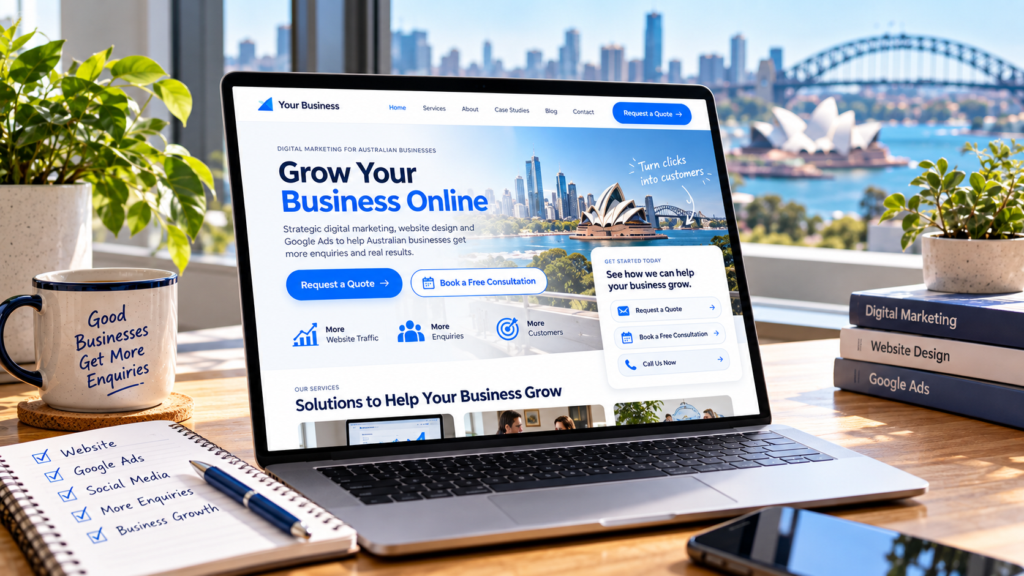
Many Australian service businesses invest in SEO, Google Ads and social media to drive more traffic to their websites. While attracting visitors is an important first step, traffic alone doesn’t guarantee business growth. If your website isn’t generating qualified leads, you could be missing valuable opportunities.
Whether you’re a trades business in Melbourne, an accounting firm in Sydney, a healthcare provider in Brisbane or a professional services business operating anywhere across Australia, your website should do more than attract visitors. It should encourage the right people to contact your business.
A steady increase in website visitors may look encouraging in your analytics, but if those visitors aren’t becoming enquiries, consultations or paying customers, something is preventing them from taking the next step. Often, the issue isn’t a lack of traffic. It’s how effectively your website converts the right audience.
In this article, we’ll explore why many Australian service businesses struggle to generate qualified leads and what you can do to improve your website’s performance and turn more visitors into genuine business opportunities.
What Are Qualified Leads?
Not every website visitor is a potential customer. Someone might visit your website to research a topic, compare providers, or gather information. While these visitors still contribute to your website traffic, they may not be ready to buy.
Qualified leads are people who are genuinely interested in your services and are more likely to become customers. They typically have a specific need, fit your target market, are located within your service area, and are ready to make an enquiry. You can learn more about lead qualification in Adobe’s guide.
For example, if someone searches for a local plumber because they have a leaking pipe or contacts an accounting firm to discuss tax planning, they’re far more likely to become a customer than someone simply browsing for general information. These visitors have a clear need and are actively looking for a solution.
For most Australian service businesses, attracting fewer high-quality enquiries delivers better long-term results than generating large volumes of unqualified traffic. Quality leads are far more likely to convert into loyal customers, improve your marketing return on investment, and support sustainable business growth. Instead of focusing solely on increasing website traffic, businesses should aim to attract visitors who are genuinely interested in their services and ready to take the next step.
You’re Attracting the Wrong Audience
One of the biggest reasons businesses receive plenty of website visitors but very few qualified leads is that they’re attracting the wrong audience.
This often happens when businesses target broad keywords that bring in visitors with little intention of hiring a service provider. Someone researching general information is very different from someone searching for “commercial electrician Melbourne” or “accountant Sydney” because they’re ready to engage with a local business.
A strong SEO strategy focuses on attracting users with genuine buying intent rather than simply increasing visitor numbers. By targeting relevant services, industries and locations, Australian businesses can improve the quality of their website traffic and generate more valuable enquiries.
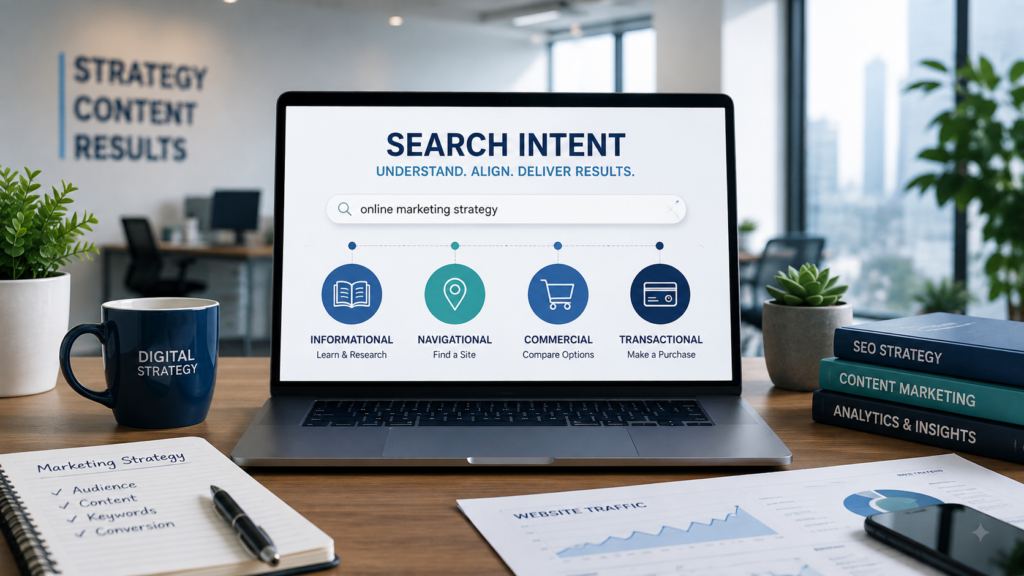
It’s also important to understand search intent. People searching for informational topics may only be looking for advice or answers, while others are actively searching for a business they can contact immediately. Optimising your website for high-intent keywords helps attract visitors who are much more likely to enquire about your services.
Creating content that answers the questions your ideal customers are already asking also helps attract visitors who are actively searching for your services instead of simply browsing online. Publishing helpful blogs, location pages and service-specific content demonstrates your expertise while improving your visibility in search results.
When your SEO strategy focuses on attracting the right audience rather than simply increasing traffic, your website is more likely to generate qualified leads that contribute to long-term business growth.
Your Website Doesn’t Clearly Explain Who You Help
Many service business websites try to appeal to everyone. Unfortunately, vague messaging often makes it difficult for visitors to determine whether your business is the right fit.
Instead of generic statements like “We provide quality services”, clearly explain:
- Who you work with
- What services you specialise in
- Which industries you serve
- The locations you service
- The problems you solve
Being specific helps visitors quickly decide whether your business can meet their needs. If your messaging speaks directly to your ideal customers, they’re more likely to stay on your website and take the next step.
For example, a website that says, “We provide digital marketing services for Australian accounting firms and professional service businesses,” gives visitors much more confidence than a broad statement that doesn’t clearly identify who the business serves.
When visitors immediately recognise that your business understands their needs, they’re far more likely to make an enquiry.
Your homepage also plays an important role in creating a strong first impression. A well-structured homepage guides visitors towards the information they need, demonstrates your expertise and clearly explains why they should choose your business over a competitor. It should also make it easy for visitors to understand your services, browse key information and contact your business without unnecessary effort.
Weak Calls-to-Action Reduce Enquiries
Even interested visitors may leave your website if you don’t clearly tell them what to do next.
Many websites rely on generic buttons such as “Contact Us” without encouraging visitors to take action or explaining what happens after they enquire. If visitors aren’t confident about the next step, they may leave your website and continue searching for another service provider.
Instead, use clear calls-to-action such as:
- Request a Quote
- Book a Consultation
- Speak With Our Team
- Get Started Today
These calls-to-action clearly communicate what visitors can expect and make it easier for them to take action. Rather than leaving people to decide what to do next, guide them towards a simple and logical next step.
It’s also important to place calls-to-action throughout your website, not just on your contact page. Including them on your homepage, service pages and blog articles gives visitors multiple opportunities to get in touch whenever they’re ready.
Every important page should provide a clear next step that encourages potential customers to contact your business. Even small improvements to your calls-to-action can increase enquiries and help generate more qualified leads over time.
Your Contact Form Creates Too Much Friction
Your contact form should make it as easy as possible for potential customers to reach you.
Unfortunately, many businesses unintentionally discourage enquiries by asking for too much information. Long forms, unnecessary questions and confusing layouts often result in visitors abandoning the process before submitting an enquiry.
Improving your contact form optimisation can significantly increase conversions. Reducing unnecessary fields, ensuring forms work well on mobile devices and providing clear instructions all help remove friction while still collecting the information your business needs.
It’s also important to only ask for information that’s necessary at the initial enquiry stage. Requesting too many details, such as extensive project requirements or multiple mandatory fields, can make the process feel time-consuming and discourage potential customers from getting in touch.
A simple contact form that asks for a name, contact details and a brief description of the enquiry is often enough to start the conversation. Additional information can always be gathered during a follow-up call or consultation.
The easier it is for someone to contact you, the more likely they are to become a qualified lead. Making the enquiry process quick, straightforward and user-friendly helps reduce abandoned forms while increasing the number of genuine enquiries your business receives.
Slow Websites Cost You Qualified Leads
Website performance directly affects user experience.
If your website loads slowly, visitors are more likely to leave before viewing your services or completing your enquiry form. This is particularly important for mobile users, who now account for the majority of website traffic across Australia.
A slow website doesn’t just frustrate visitors. It can also reduce search visibility, increase bounce rates and negatively impact conversions. Even a delay of a few seconds can be enough for potential customers to leave your website and continue searching for a competitor.
Website speed also influences how people perceive your business. A fast, responsive website creates a positive first impression and gives visitors confidence that your business is professional and trustworthy. On the other hand, slow loading pages can make your business appear outdated or unreliable, even if you provide excellent products or services.
Fast-loading websites create a better experience for potential customers and encourage them to stay longer, explore your services and make an enquiry. Regular website maintenance, reliable hosting and ongoing performance optimisation all play an important role in keeping your website running efficiently and generating more qualified leads.
Trust Signals Influence Buying Decisions
Even if someone is interested in your services, they may hesitate to contact you if your website doesn’t build confidence.
Australian consumers often compare several businesses before deciding who to contact. Your website should demonstrate that you’re experienced, trustworthy and capable of delivering quality results.
Some of the strongest trust signals include:
- Google Reviews
- Client testimonials
- Case studies
- Industry certifications
- Professional team photos
- Clear contact details
- Recent project examples
These trust signals help reassure potential customers that your business is genuine and capable of delivering on its promises. They also reduce uncertainty, making visitors feel more confident about taking the next step.
Keeping testimonials and project examples up to date is equally important. Recent reviews and case studies demonstrate that your business continues to deliver successful outcomes and remains active within your industry. This is particularly valuable for service businesses, where trust often plays a significant role in a customer’s decision-making process.
The more confidence your website creates, the more likely visitors are to contact your business, resulting in higher-quality enquiries and more qualified leads.
Your Website Doesn’t Answer Important Questions
Before contacting a business, most people want answers to common questions. If they can’t quickly find the information they need, they’re less likely to enquire and may continue searching for another provider.
For example:
- What services do you offer?
- Which locations do you service?
- What does your process involve?
- How quickly can you get started?
- Why should someone choose your business?
Providing clear answers to these questions helps visitors feel more informed and confident about choosing your business. It also reduces uncertainty by giving potential customers a better understanding of what to expect before making contact.
Detailed service pages, FAQs and helpful blog content not only improve the user experience but also support your SEO strategy by addressing the topics your audience is actively searching for. This makes it easier for search engines to understand your website while helping potential customers find relevant information.
The easier it is for visitors to find the answers they’re looking for, the more likely they are to trust your business, make an enquiry and become qualified leads.
Mobile Experience Matters More Than Ever
More Australians now browse websites using smartphones than desktop computers. Whether they’re searching for a local trades business, healthcare provider or professional service, many people expect to find the information they need quickly and easily on a mobile device.
If your website isn’t easy to use on mobile devices, you’re likely losing potential enquiries before visitors even have a chance to learn about your services.
Common issues include:
- Small text that’s difficult to read
- Slow page loading
- Buttons that are difficult to tap
- Forms that are difficult to complete
- Poor navigation
A poor mobile experience can frustrate visitors and encourage them to leave your website in favour of a competitor with a faster, more user-friendly site. Since many users make quick decisions when browsing on their phones, even small usability issues can affect your conversion rate.
A responsive, mobile-friendly website helps ensure every visitor has a positive experience regardless of the device they’re using. By making it easy for people to browse your services, access important information and submit an enquiry, you’ll improve the user experience and increase your chances of generating more qualified leads.
How to Generate More Qualified Leads From Your Website
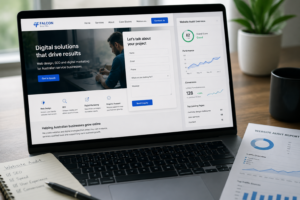
Many businesses celebrate growing website traffic while overlooking the metric that matters most: qualified enquiries.
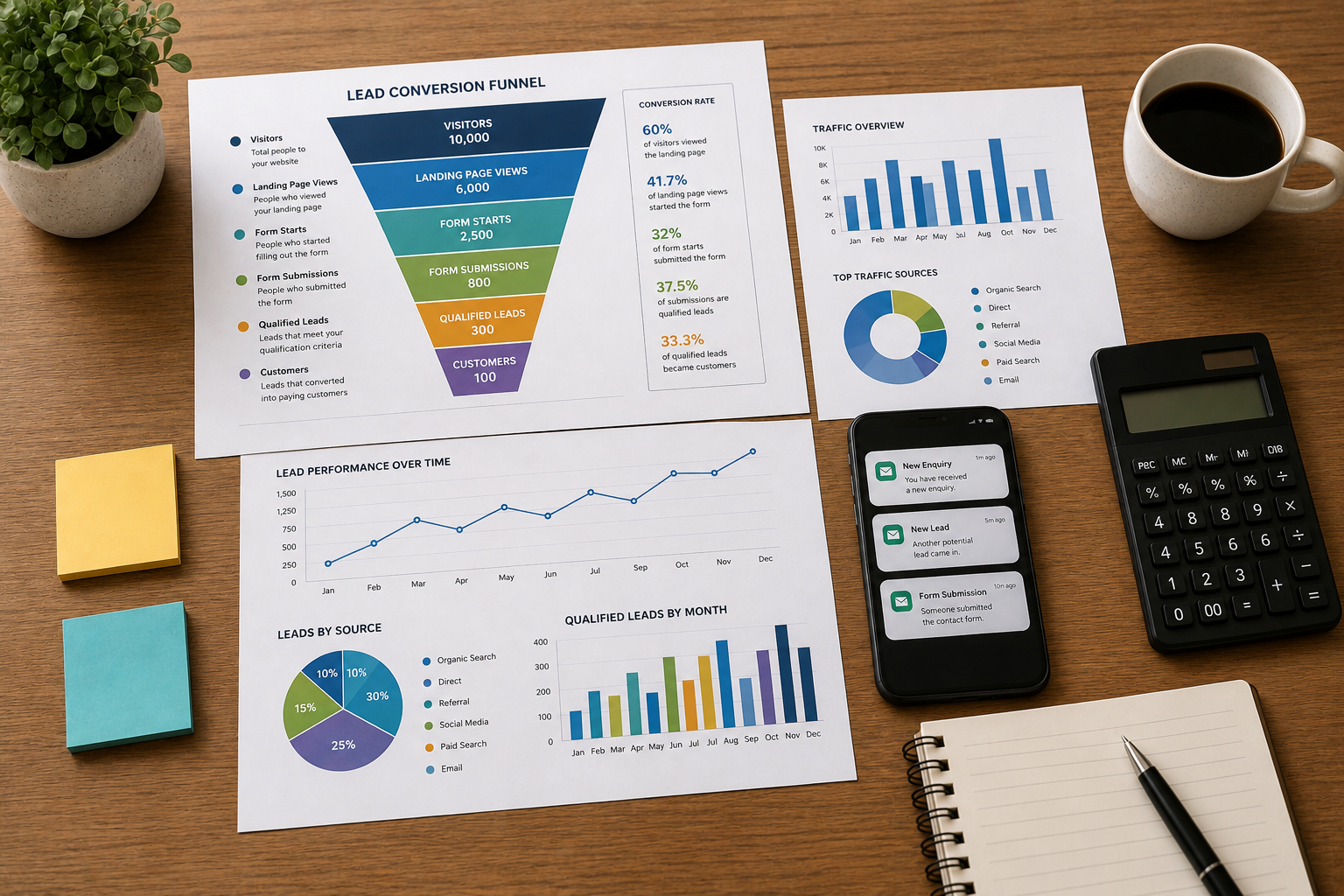
Instead of focusing solely on visitor numbers, monitor how effectively your website converts visitors into customers. Reviewing enquiry forms, phone calls, booked consultations and your overall conversion rate optimisation strategy provides valuable insights into your website’s performance.
Tracking the right metrics helps you understand what’s working and where improvements can be made. For example, if your website attracts plenty of visitors but only a small number of enquiries, it may indicate issues with your messaging, calls-to-action or user experience rather than a lack of traffic.
Regularly analysing your website’s performance also allows you to make informed decisions based on real data rather than assumptions. Testing different headlines, improving page layouts or simplifying your enquiry process can all contribute to better conversion rates over time.
Small improvements to your messaging, website structure, calls-to-action and user experience can significantly improve lead quality without increasing your marketing budget. By focusing on continuous conversion rate optimisation, Australian service businesses can generate more qualified leads and achieve sustainable long-term growth.
Frequently Asked Questions
Why is my website getting visitors but not qualified leads?
Your website may be attracting the wrong audience, have unclear messaging, weak calls-to-action, poor user experience or a contact form that discourages enquiries. Improving these areas can help convert more visitors into qualified leads.
What makes a qualified lead?
A qualified lead is someone who matches your ideal customer profile, has a genuine need for your services, is within your target market and is ready to take the next step towards becoming a customer.
How can I improve the quality of leads from my website?
Start by improving your website messaging, targeting the right audience, strengthening your calls-to-action, simplifying your contact forms and ensuring your website delivers a fast, mobile-friendly experience.
Does SEO help generate qualified leads?
Yes. A well-planned SEO strategy helps your website appear in search results when people are actively looking for your services. This attracts more relevant traffic and increases the likelihood of generating qualified leads.
Turn More Website Visitors Into Qualified Leads
Getting more website traffic is only part of the equation. Sustainable business growth comes from attracting the right audience and converting those visitors into qualified enquiries.
At Falcon Digital, we help Australian service businesses improve website performance through strategic web design, SEO and conversion optimisation. Whether your business operates in Melbourne, Sydney, Brisbane, Perth, Adelaide or regional Australia, we can help you create a website that generates more qualified leads and supports long-term business growth.
Get in touch with our team today to discover how we can help your website generate more qualified leads.