Many business owners assume that running successful Google Ads campaigns requires thousands of dollars every month. While a larger advertising budget can increase your reach, it’s not the only factor that determines campaign success. In many cases, businesses with a modest Google Ads budget achieve excellent results because they focus on targeting the right audience, using relevant keywords and continually optimising their campaigns.
A successful Google Ads campaign isn’t simply about spending more money. It’s about reaching potential customers at the right moment, creating relevant ads and guiding them towards taking action. With the right strategy, businesses of all sizes can compete effectively, even when competing against businesses with significantly larger advertising budgets.
Investing in professional Google Ads management services can also help businesses maximise every advertising dollar by building targeted campaigns, improving ad performance and attracting qualified leads instead of simply increasing website traffic.
In this article, we’ll explore whether you really need a large Google Ads budget, what influences campaign performance and how businesses can generate better results without overspending. You’ll also discover practical strategies to help you make smarter advertising decisions and maximise your return on investment, regardless of your budget.
Start With Clear Campaign Goals
Before deciding how much to spend, it’s important to define what success looks like for your business. Every Google Ads campaign should begin with a clear objective that aligns with your overall marketing goals. Without a clear direction, it’s easy to spend your advertising budget on clicks that don’t contribute to meaningful business outcomes.
Your objectives may include:
- Generating qualified enquiries
- Increasing phone calls
- Driving online sales
- Booking appointments
- Building brand awareness
A business focused on lead generation will have different campaign requirements than an online retailer or an organisation aiming to increase website traffic. Defining your priorities early allows you to choose the right campaign type, target the most relevant audience and measure the results that matter most to your business.
Setting measurable goals also helps you determine whether your Google Ads budget is delivering a positive return rather than simply generating clicks. Instead of focusing only on impressions or website visits, monitor conversions, enquiries and sales to understand how your campaigns are contributing to business growth.
If you’re new to paid advertising, watching a Google Ads tutorial by Ivan Mana is a great way to understand how campaigns work before launching your first campaign.
Focus on High-Intent Keywords Instead of High Search Volume
Many businesses believe they need to target the most popular keywords to achieve success. However, high search volume doesn’t always translate into better results. While broad keywords may attract more clicks, they can also lead to higher advertising costs and lower conversion rates if the people clicking your ads aren’t ready to take action.
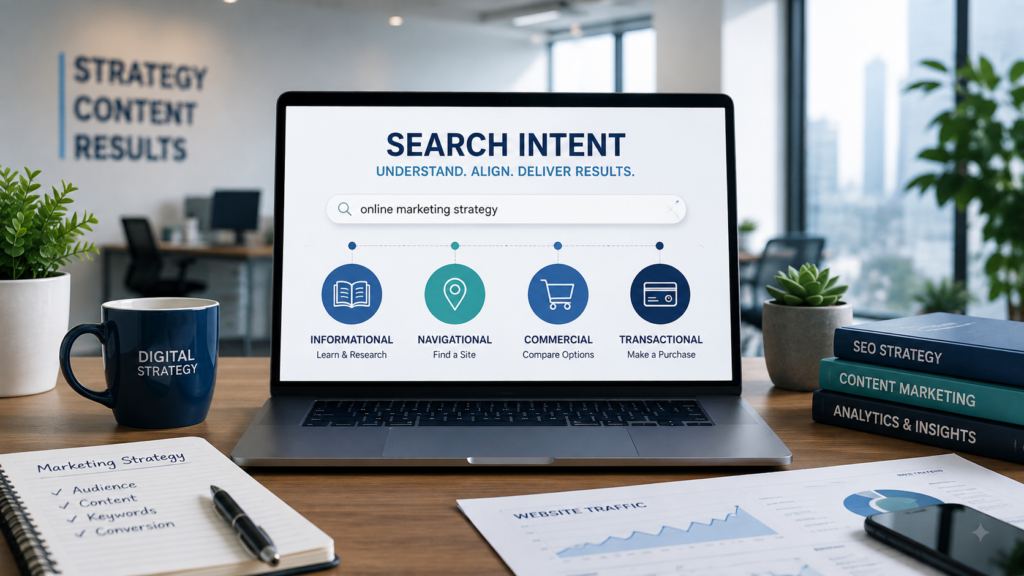
High-intent keywords are search terms used by people who are actively looking for a product or service and are much closer to making a purchasing decision. These users often know what they need and are searching with the intention of contacting a business, requesting a quote or making a purchase.
For example, someone searching for “accountant near me” or “website design agency Melbourne” is often more likely to enquire than someone searching for a broad informational topic. Focusing on these more specific searches helps attract visitors who are genuinely interested in your services.
By targeting high-intent keywords, businesses can use their Google Ads budget more efficiently, improve the quality of their website traffic and reduce wasted clicks. This often leads to stronger conversion rates and a better return on advertising spend.
It’s equally important to use negative keywords. These prevent your ads from appearing for irrelevant searches, helping you avoid unnecessary advertising costs while improving overall campaign performance. Regularly reviewing your search terms report can also help identify keywords that aren’t generating valuable enquiries.
Choosing quality keywords over quantity often produces better long-term results than simply trying to reach as many people as possible. A smaller audience with stronger buying intent is far more valuable than a large audience that’s unlikely to become customers.
Target the Right Audience to Reduce Wasted Ad Spend
Even with the right keywords, your campaigns may underperform if they’re shown to the wrong audience. In many cases, targeting a smaller but more relevant audience delivers better results than showing your ads to as many people as possible. The goal is to ensure your ads are seen by people who are genuinely interested in your products or services and are more likely to convert into customers.
Google Ads allows businesses to target users based on:
- Location
- Device type
- Time of day
- Audience interests
- Previous website visits
For local businesses, geographic targeting ensures your ads only appear to people within your service area. This prevents businesses from paying for clicks that are unlikely to convert into customers. You can also schedule your ads to appear during business hours or at times when your target audience is most likely to search, helping you make better use of your Google Ads budget.
Remarketing campaigns also allow businesses to reconnect with people who have previously visited their website. Since these users are already familiar with your business, they’re often more likely to return and complete an enquiry or purchase than someone discovering your business for the first time.
As your campaigns generate more data, you can continue refining your audience targeting by excluding low-performing audiences and focusing more of your budget on those that consistently deliver results. This ongoing optimisation helps improve campaign performance while reducing unnecessary advertising costs.
Smart audience targeting helps businesses maximise their Google Ads budget without significantly increasing advertising spend, making it possible to generate more qualified leads while keeping costs under control.
Improve Your Landing Pages to Increase Conversions

Generating clicks is only part of a successful advertising campaign. Once someone clicks your ad, your website must encourage them to take action. If visitors can’t quickly find the information they’re looking for or the page doesn’t meet their expectations, they’re likely to leave without making an enquiry, regardless of how effective your ad was.
Rather than sending visitors to your homepage, businesses should consider directing them to a dedicated landing page that closely matches the advertisement they clicked. A landing page designed specifically for your campaign provides a more relevant experience and helps visitors move smoothly towards the next step.
An effective landing page should include:
- Clear messaging
- Relevant information
- A compelling value proposition
- Strong calls-to-action
- Mobile-friendly design
- Fast loading speeds
Businesses should also review their contact forms to ensure they’re simple, easy to complete and only request essential information. Reducing unnecessary friction makes it easier for potential customers to enquire and increases the likelihood of converting website visitors into qualified leads.
It’s also important to maintain consistency between your ad and your landing page. The offer, messaging and call-to-action should align with what users clicked on, helping to build confidence and reduce confusion throughout the customer journey.
In many cases, improving your website’s conversion rate delivers better results than simply increasing your advertising budget because more visitors take action after arriving on your website. Even small improvements to your landing pages can significantly increase your return on advertising investment over time.
Set a Realistic Budget and Track Performance
One of the biggest misconceptions about Google Ads is that businesses must compete with larger companies by matching their advertising spend. While bigger budgets can increase visibility, they don’t automatically deliver better results. A well-planned campaign with the right targeting and ongoing optimisation can often outperform a campaign with a much larger budget.
The reality is that many successful campaigns begin with a modest budget and gradually increase as performance improves. Starting with a realistic budget allows businesses to collect valuable data, understand what resonates with their audience and make informed decisions before investing more heavily.
According to Google Ads Help, understanding your Google Ads daily budget helps businesses control advertising costs while giving campaigns enough flexibility to perform effectively. Rather than increasing your budget too quickly, it’s often more beneficial to optimise your campaigns first and scale your investment based on proven results.
Instead of focusing purely on clicks, businesses should regularly monitor key performance metrics such as:
- Cost per lead
- Conversion rate
- Click-through rate (CTR)
- Cost per conversion
- Return on ad spend (ROAS)
Tracking these metrics provides valuable insights into campaign performance and helps identify opportunities for ongoing improvement. Regularly reviewing campaign data allows you to identify what’s working, make informed adjustments and maximise your return on investment without increasing unnecessary advertising costs.
Test, Optimise and Improve Your Campaigns Regularly
Google Ads isn’t a “set and forget” marketing channel. Consumer behaviour, search trends and competitor activity can all change over time, which means your campaigns should evolve as well. Regular monitoring and optimisation help ensure your ads continue delivering the best possible results.
The most successful campaigns are continuously monitored, tested and refined using real performance data. Rather than relying on assumptions, businesses should use campaign insights to understand what’s working, identify areas for improvement and make informed decisions that improve overall performance.
Businesses should regularly test different elements of their campaigns, including:
- Headlines
- Ad descriptions
- Keywords
- Audience targeting
- Landing pages
- Calls-to-action
Even small improvements can significantly reduce cost per lead while increasing conversion rates. For example, refining your ad copy, adjusting keyword targeting or improving a landing page can have a meaningful impact on campaign performance without requiring additional advertising spend.
Rather than increasing your budget immediately, ongoing optimisation often delivers greater value by helping every advertising dollar work harder. By consistently reviewing campaign data and making incremental improvements, businesses can maximise their return on investment and continue generating qualified leads over the long term.
Build a Google Ads Strategy That Delivers Long-Term Results
While Google Ads can generate immediate visibility, the best results often come from integrating paid advertising with other digital marketing strategies. Rather than relying on a single channel, businesses that combine organic search, high-quality website content and ongoing optimisation are more likely to generate consistent enquiries and achieve sustainable business growth.
Businesses should also review their campaigns regularly to ensure they continue aligning with changing customer behaviour, market trends and business goals. As your business grows, combining Google Ads and social media marketing allows you to reach potential customers across multiple channels while creating a more balanced and effective digital marketing strategy.
Instead of viewing Google Ads as a short-term solution, it’s more effective to treat it as one part of a broader marketing approach. A high-performing website, valuable content, strong organic visibility and well-managed advertising campaigns all work together to attract qualified leads and improve your return on investment over time.
Ultimately, successful Google Ads campaigns aren’t determined by the size of your advertising budget. They’re built on clear objectives, smart targeting, continuous optimisation and a commitment to improving results. By focusing on strategy rather than simply increasing advertising spend, businesses can maximise every marketing investment while creating sustainable, long-term growth.
Frequently Asked Questions
How much should a small business spend on Google Ads?
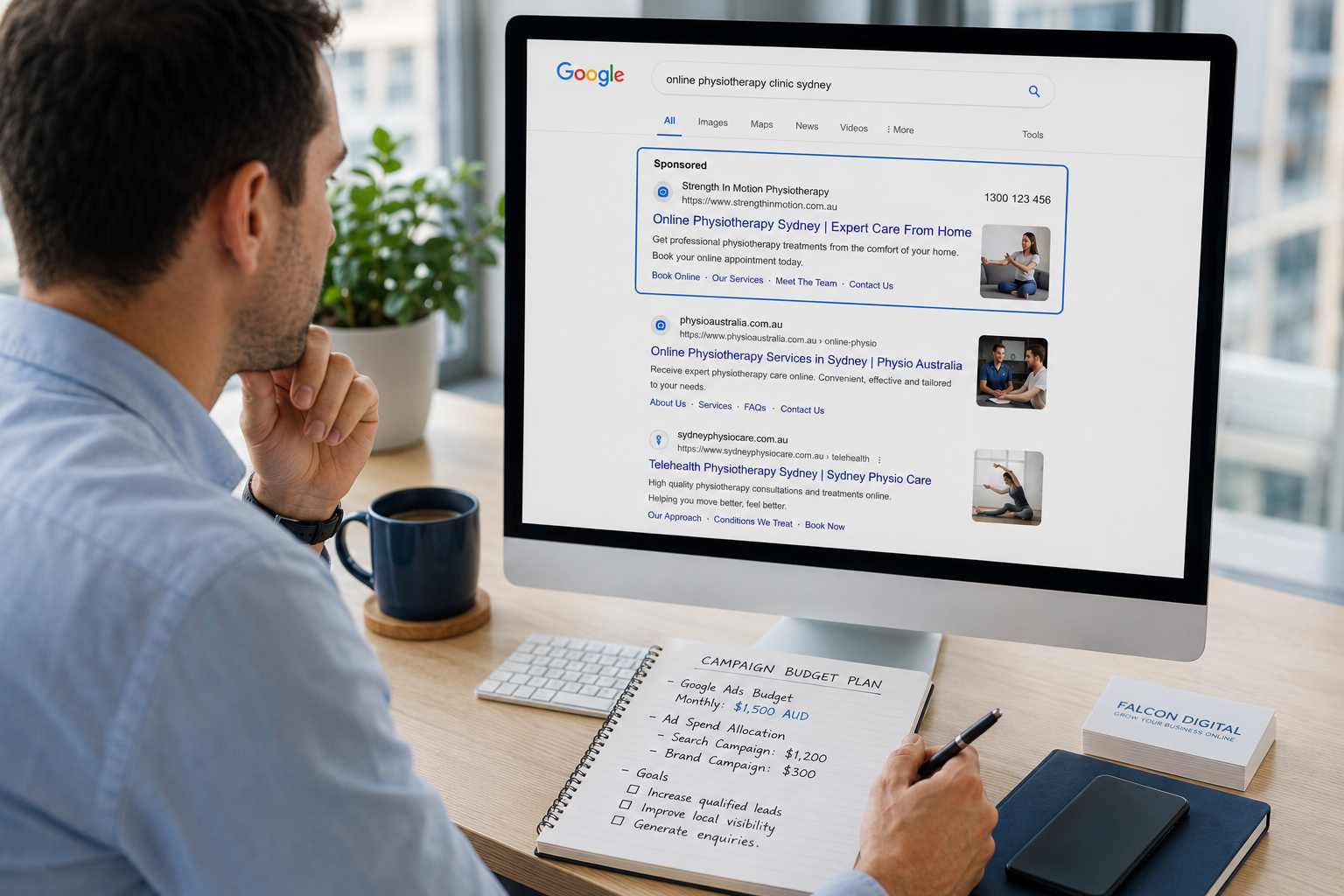
There isn’t a fixed amount that works for every business. Your Google Ads budget should reflect your industry, competition, objectives and expected return on investment. If you’re running your Google Ads campaigns yourself, you can begin with a smaller budget and increase ad spend overtime as campaigns become more effective. The trade off is you will need to spend time learning and running your campaigns, making and correcting mistakes, and continually checking and optimising campaigns, which can be difficult for small business owners who are busy on service delivery. For small businesses in most industries we recommend $1500 / month as a starting point for ad spend, which for most industries will give enough volume to make data-led decisions and to cover the cost of running the campaign.
Can a small Google Ads budget generate qualified leads?
It’s possible to generate results on a small budget when campaigns target high-intent keywords, relevant audiences and high-converting landing pages. However from our experience working with clients, the main problem with a small budget is not getting enough volume and data to make optimisation decisions. The other issue is it may not be a cost effective use of your time (or money if getting an agency to manage it for you) to spend hours every week on your campaign if you’re only spending a small amount to run the campaigns. Having high fixed costs on a low advertising budget will dramatically increase your cost per conversion. It’s for this reason we recommend a minimum $1500 / month ad spend for most businesses getting started. In competitive industries where CPCs are higher, the starting budget may need to be a lot higher.
How long does it take for Google Ads to produce results?
Google Ads can begin generating traffic and converions immeditely, it’s not uncommon to receive a lead on the first day of the campaign launch. However, achieving consistent results requires ongoing testing and optimisation.
Should I manage Google Ads myself or hire a professional?
While it’s possible to manage your own campaigns, many businesses benefit from working with professionals who can improve targeting, reduce wasted ad spend and maximise the return on their Google Ads budget. We’d only recommend running ads yourself if you’re willing to spend time and effort learning Google Ads property including tracking conversions, and if you’re spending enough to make data-driven decisions.
Make Every Google Ads Budget Work Harder
You don’t need the biggest advertising budget to achieve great results. What you need is a strategy that focuses on reaching the right audience, creating high-performing campaigns and making every advertising dollar count. By combining smart targeting, ongoing optimisation and data-driven decision-making, businesses of all sizes can generate consistent, qualified enquiries and maximise their return on investment.
At Falcon Digital, we take a strategic approach to Google Ads management, helping businesses maximise their advertising investment through data-driven campaigns, continuous optimisation and transparent reporting. Our goal is simple: to help your business generate better results while making every advertising dollar count.
Speak with us today to discover how a tailored Google Ads strategy can help you reach the right audience, generate more qualified leads and support your long-term business growth.