Every online search has a purpose behind it. A person might be looking for an answer, comparing different options, finding a specific business, or preparing to make a purchase. Understanding search intent can help businesses create more relevant content and make better decisions about how they market themselves online.
When your website and marketing content match what potential customers are actually looking for, you have a better opportunity to attract relevant visitors and guide them towards the next step. This is where a strong marketing strategy becomes valuable. Rather than creating content simply because a keyword has search volume, businesses can consider what customers want to achieve when they enter that search.
Search intent can influence everything from the keywords you target and the content you publish to the calls-to-action you use and the pages you create. A business targeting people who are still researching a problem will need a different approach from one targeting customers who are ready to compare providers or make an enquiry.
In this guide, we’ll explain what search intent means, the different types of searches people make, and how understanding those searches can help businesses develop a more effective online marketing strategy.
What Is Search Intent and Why Does It Matter?
Search intent is the reason behind a person’s search query. It describes what the user is hoping to find when they enter a phrase into Google or another search engine. Someone searching for “how to improve website speed” has a different goal from someone searching for “website developer near me,” even though both searches relate to websites.
Understanding this difference helps businesses create content that better matches what their audience expects to find. HubSpot explains that understanding keyword intent can help marketers identify what users want to accomplish through their searches and develop more relevant content.
For example, a person searching for “what is SEO” is probably looking for educational information. They may not be ready to contact an SEO provider yet. On the other hand, someone searching for “SEO agency near me” is likely further along in the decision-making process and may be comparing providers.
If both searches were directed to the same type of page, the experience may not meet the user’s expectations. The first person may want a helpful guide, while the second may expect to see services, reviews, pricing information, or a clear way to make contact.
This is why search intent matters beyond simply choosing keywords. It helps businesses understand what type of information customers need at different stages of their journey.
How Search Intent Shapes Online Marketing Strategy
A successful online marketing strategy should be based on more than publishing content and hoping it attracts visitors. Businesses need to consider what their target audience is trying to accomplish at each stage of the search journey.
For example, someone discovering a problem for the first time may respond well to an educational blog. Someone comparing solutions may be more interested in a comparison article, case study, service page, or customer reviews. A person who already knows what they want may simply need a clear service page and an easy way to enquire.
This means search intent can influence the type of content a business creates and where that content sits within the customer journey.
A practical approach is to consider:
- What problem is the customer trying to solve?
- What information are they looking for?
- Are they researching or comparing options?
- Are they ready to contact a provider?
- What would make the next step easier for them?
Answering these questions can help businesses avoid creating content that attracts the wrong audience.
It can also help connect different marketing activities. Blog content can introduce potential customers to a problem, while service pages can provide a solution. Reviews can build confidence, and clear calls-to-action can encourage qualified visitors to make an enquiry.
When these elements work together, the website becomes more than a collection of pages. It becomes part of a broader marketing system designed around what customers actually need.
The Different Types of Search Intent
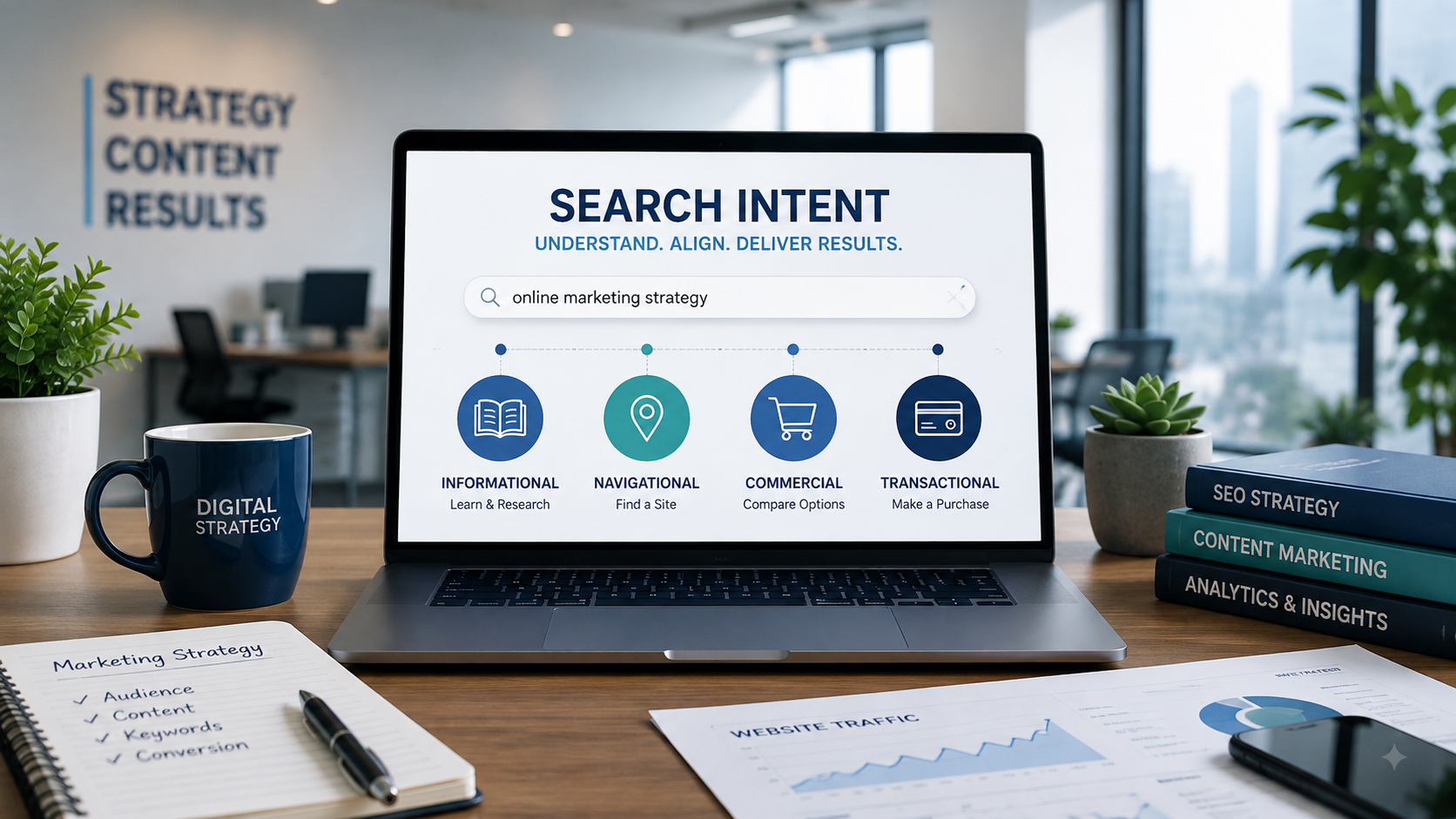
Searches can generally be grouped into four broad types: informational, navigational, commercial, and transactional. Understanding these categories makes it easier to determine what type of content is appropriate for a particular query.
Informational Search Intent
Informational searches happen when someone wants to learn something or find an answer.
Examples include:
- What is SEO?
- How does Google Ads work?
- How can I improve my website?
- What makes a good business website?
At this stage, the searcher may not be ready to buy anything. They are looking for useful information that helps them understand a topic or solve an initial problem.
Blog posts, guides, tutorials, FAQs, and educational resources are often suitable for this type of search.
The goal is to provide genuinely useful information while establishing your business as a knowledgeable and trustworthy source.
Navigational Search Intent
Navigational searches happen when someone is looking for a specific website, business, brand, or page.
For example, someone might search for:
- Falcon Digital
- Falcon Digital reviews
- Falcon Digital contact
- Facebook login
The user already has a destination in mind. Your job is to make it easy for them to find the correct page and complete whatever action they intended to take.
This is particularly important for branded searches because people who already know your business should be able to find your website and important pages quickly.
Commercial Search Intent
Commercial searches usually happen when someone is researching options before making a decision.
Examples include:
- Best website designers
- Best SEO agency
- Website design companies
- Google Ads agency reviews
- SEO services comparison
The person may not be ready to purchase immediately, but they are considering their options.
Content such as comparison guides, service pages, reviews, testimonials, case studies, and detailed explanations can help answer the questions they have before making a decision.
Transactional Search Intent
Transactional searches indicate that someone is closer to taking action.
Examples might include:
- Book a website consultation
- SEO services near me
- Contact a digital marketing agency
- Website design quote
At this stage, users generally don’t need a long educational explanation before they can act. They need clear information about the service, confidence that the business can help, and an obvious next step.
Your landing pages and service pages should therefore make it easy to enquire, request a quote, book a consultation, or complete another relevant action.
Why Businesses Often Target the Wrong Search Intent
One of the biggest problems with online marketing is assuming that a keyword automatically tells you what content to create. Search volume can be useful, but it doesn’t tell the whole story.
A keyword might attract thousands of searches while still bringing visitors who have no interest in your particular service.
For example, a business might create an article targeting a broad informational keyword and receive plenty of traffic. However, if those visitors are only looking for basic information and the business immediately pushes them towards a sales page, the content may fail to generate meaningful enquiries.
The opposite can also happen. A business may create a highly promotional page for a search where users are actually looking for educational information. Visitors may leave because the page doesn’t answer the question they came to solve.
This is why businesses need to consider the intent behind the search rather than focusing only on the keyword itself.
How to Match Your Content With Search Intent
Once you understand what a searcher is trying to accomplish, the next step is creating content that satisfies that need.
One of the simplest ways to identify intent is to search the keyword yourself and examine the results. The pages appearing at the top of Google can provide useful clues about the type of content users expect to see.
For example, if most results for a keyword are detailed guides, creating another purely promotional service page may not be the best approach. If the results are mostly service pages, comparison pages, or product listings, that tells you users may have stronger commercial or transactional intent.
Ahrefs recommends analysing search intent to understand the dominant intent behind a query and create content that aligns with what searchers expect.
Understand What Customers Are Searching For
Start by identifying the questions, problems, and decisions your audience faces. Don’t only look for keywords related to your services. Think about the language customers use when describing their problems.
Create Content That Answers Their Questions
Once you understand the need behind a search, create content that directly addresses it. Avoid adding information simply to make an article longer. Every section should help the reader understand the topic, solve a problem, or move closer to an informed decision.
Align Keywords With Customer Needs
Your target keywords should reflect what people actually want to find. A keyword with strong search volume isn’t necessarily valuable if the intent behind it doesn’t match your service or audience.
Businesses should also review their search engine ranking alongside the relevance of the traffic they attract. Ranking well for unrelated searches may bring visitors without contributing to meaningful business results.
Make the Next Step Clear
Once your content has answered the user’s question, provide an appropriate next step. This might be another helpful article, a relevant service page, a contact form, or a consultation depending on the user’s stage in the journey.
Turning Search Intent Into More Qualified Leads
Getting visitors to your website is only one part of successful online marketing. The bigger goal is attracting people who are genuinely interested in what your business offers.
Matching content to search intent can help improve the quality of the traffic reaching your website. Someone who finds your page because it directly answers their question is more likely to engage with the rest of your website than someone who arrived through an unrelated search.
This is particularly important for businesses focused on lead generation. If your website receives plenty of visitors but few enquiries, the issue may not simply be traffic volume. It could be that the content is attracting people who aren’t the right audience or isn’t giving them the information they need to take the next step.
Understanding why a website gets traffic but no enquiries can help businesses identify whether their content, messaging, user experience, or conversion process needs improvement.
A stronger approach is to create different types of content for different stages of the customer journey. Educational content can attract people researching a problem, commercial content can help people compare options, and service-focused pages can support visitors who are ready to take action.
When these pieces work together, businesses can create a clearer path from search to enquiry.
How Search Intent Can Improve Your Online Marketing Strategy
Understanding search intent can improve an online marketing strategy in several ways.
First, it can help businesses prioritise the right content. Instead of publishing articles based solely on keywords, businesses can identify the questions and problems their customers are actually trying to solve.
Second, it can improve the customer journey. When each page provides the information users expect at that particular stage, visitors can move more naturally from research to consideration and eventually to action.
Third, it can make marketing resources more effective. Businesses don’t need to create content simply for the sake of publishing something new. They can focus their time and budget on pages and campaigns that address genuine customer needs.
Finally, understanding search intent can help businesses identify gaps in their existing content. If customers are searching for information that the website doesn’t currently provide, that may represent an opportunity to create a new page, guide, FAQ, or service resource.
Measuring Whether Your Strategy Matches Search Intent
After creating content around different types of searches, it’s important to measure whether the strategy is actually attracting the right audience.
Useful indicators can include:
- Organic traffic
- Keyword rankings
- Click-through rates
- Engagement
- Enquiry submissions
- Contact form completions
- Phone calls
- Conversion rates
However, traffic should never be viewed in isolation. A page that attracts fewer visitors but generates qualified enquiries may be more valuable than a high-traffic article that produces no business opportunities.
Regularly reviewing your organic search performance can also help identify which topics, keywords, and pages are contributing to your overall marketing goals. Understanding the role of organic search can provide further insight into how search visibility contributes to long-term growth.
The goal is not simply to rank for more keywords. It is to attract the right people, provide useful information, and create opportunities for them to take meaningful action.
Common Questions About Search Intent
How do I know what search intent my customers have?
Start by examining the actual search results for the keywords you’re targeting. Look at the types of pages appearing, the questions being answered, and the actions those pages encourage visitors to take. You can also review customer questions, enquiries, and conversations to identify the problems and information people are actively looking for. Combining search results with real customer insights gives you a stronger understanding of intent.
Why does search intent matter for online marketing?
Search intent helps businesses create marketing content that matches what potential customers actually want to find. When a page satisfies the purpose behind a search, visitors are more likely to find the information useful and continue exploring the website. This can improve the customer experience while helping businesses attract more relevant traffic and potential leads.
Can search intent improve website traffic?
Yes, understanding search intent can help businesses attract more relevant organic traffic by creating content that aligns with what users expect from their searches. The goal isn’t necessarily to increase traffic at any cost, but to attract visitors who are genuinely interested in the topic, service, or solution being offered. Relevant traffic is generally more valuable because it has a stronger connection to the business’s target audience.
How does search intent affect content strategy?
Search intent helps determine what type of content should be created for different keywords and stages of the customer journey. Informational searches may require educational articles, while commercial searches may benefit from comparisons, reviews, or detailed service pages. Transactional searches generally require clear, conversion-focused pages that make it easy for users to take action.
Improving Your Marketing Strategy With Search Intent
A successful online presence isn’t built by targeting keywords alone. Businesses need to understand the people behind those searches and the reasons they are looking for information, comparing options, or seeking a solution.
By understanding search intent, businesses can create content that answers genuine questions, supports customers throughout their decision-making process, and connects different parts of their online marketing strategy.
This approach can also help businesses avoid wasting resources on content that attracts the wrong audience. Instead, every page can have a clearer purpose, whether that is educating potential customers, building trust, generating leads, or encouraging enquiries. Businesses can also use these insights to develop more effective ways to generate leads for your business.
When your content, website, and marketing activities are aligned with customer needs, your online presence becomes more focused and effective.
Connect Your Marketing Strategy With What Customers Are Searching For
Understanding what customers search for is an important part of building a more effective online presence. When businesses align their content and marketing activities with genuine customer needs, they can attract more relevant visitors, provide better experiences, and create stronger opportunities for conversion.
A thoughtful approach to search intent can help businesses move beyond simply chasing rankings and focus on attracting the people who are most likely to become customers. It can also help businesses make more informed decisions about the content they create, the messages they use, and the ways they connect with their audience.
If you’re ready to build a more focused online marketing strategy around what your customers are actually searching for, contact us today to discuss how we can help.