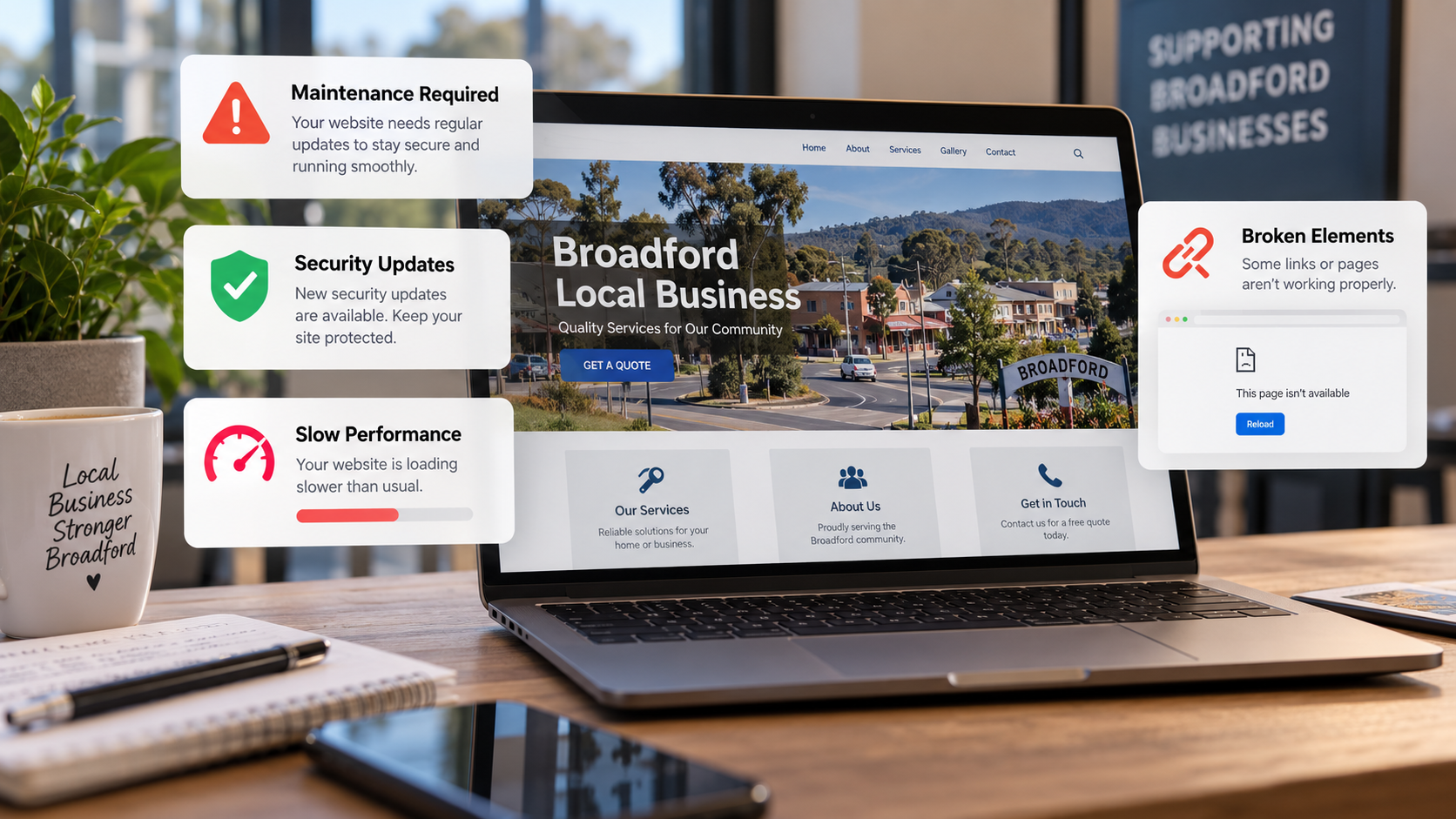
A business website is often the first place potential customers go to learn about a company, explore its services and decide whether to make an enquiry. But launching a website is only the beginning. Without regular maintenance, even a well-designed website can develop problems that affect its performance, security and ability to generate leads.
For businesses investing in digital marketing in Broadford, maintaining a reliable website is an important part of supporting their online presence. Broken links, outdated information, slow loading times and technical issues can create a poor experience for visitors and undermine other marketing efforts.
Understanding the risks of neglecting website maintenance can help Broadford businesses protect their websites, build customer trust and ensure their online presence continues to support business growth.
Why Website Maintenance Matters for Broadford Businesses
A website needs ongoing attention to remain secure, functional and relevant. Software updates, performance checks, content reviews and routine testing all help keep it working as intended.
According to Mailchimp’s guide to website maintenance, maintaining a website involves ongoing tasks that help preserve its functionality, security and overall user experience.
For small businesses, these tasks can be easy to overlook when day-to-day operations take priority. However, leaving a website unattended can lead to problems that become more difficult and expensive to resolve over time.
Regular website maintenance for small businesses can help to:
- Keep website software, plugins and themes up to date.
- Identify broken links and malfunctioning features.
- Maintain website speed and performance.
- Protect website data through regular backups.
- Ensure contact details, service information and business hours remain accurate.
- Reduce the risk of unexpected website downtime.
For businesses in Broadford, a reliable website can support local marketing by giving potential customers a clear, accessible place to learn about services and get in touch.
How Outdated Websites Can Affect Customer Trust
Customers often form an impression of a business based on its website. If the information is outdated, pages load slowly or the design no longer works properly on mobile devices, visitors may question whether the business is professional and reliable.
For example, a local service business might still display old contact details, discontinued services or opening hours that no longer apply. Even small inconsistencies can create confusion and make it harder for customers to take the next step.
Website performance also influences the visitor experience. Research and guidance from Cloudflare on why site speed matters explain the importance of loading speed to website performance and user experience.
When a website is slow or difficult to navigate, visitors may leave before finding the information they need. This can reduce the chances of enquiries, particularly when customers are comparing several local providers.
Regular website updates help keep information accurate, improve usability and reinforce the impression that a business is active and attentive to its customers.
The Risks of Broken Features and Missed Enquiries
A website may appear to be working normally while important features are failing in the background. Contact forms may stop submitting, enquiry buttons may lead to the wrong page, or links to service information may no longer work.
These problems can have a direct effect on lead generation.
Imagine a potential customer visiting a Broadford business website after finding it through Google. They are ready to request a quote, but the contact form fails to submit. If there is no alternative way to get in touch, the business could lose that enquiry without even realising it.
Common website issues that can lead to missed enquiries include:
- Contact forms that fail to send messages.
- Broken phone number or email links.
- Buttons that do not work on mobile devices.
- Booking systems that display errors.
- Incorrect or outdated contact information.
- Pages that return errors or cannot be accessed.
Regular testing helps identify these problems before they affect more visitors. Businesses can also improve the enquiry process by optimising contact forms so customers can submit their details easily and understand what happens next.
Website maintenance should therefore include checking important user journeys, particularly the steps customers take to call, book, request a quote or submit an enquiry.
How Neglected Updates Can Create Security Problems
Website security is another important reason to keep a website maintained. Content management systems, plugins and themes often receive updates that address bugs, improve compatibility or fix security vulnerabilities.
When these updates are ignored, a website may become more exposed to known security issues. Depending on the website and its setup, this can increase the risk of malicious activity, unauthorised access, spam or disruption.
Security problems can affect more than the website itself. If customers cannot access a business website or have concerns about how their information is handled, their confidence in the business may suffer.
To reduce these risks, businesses should:
- Keep website software, plugins and themes updated.
- Use strong passwords and appropriate access controls.
- Remove unused plugins, themes and user accounts.
- Use an SSL certificate to help protect information transmitted between the website and its visitors.
- Check for unusual activity and potential security issues.
- Maintain recent backups in case the website needs to be restored.
Website security requires ongoing attention rather than a one-time setup. A maintenance routine can help businesses identify potential problems and respond before they cause greater disruption.
Why Website Backups and Monitoring Matter
Even with regular updates and security measures, technical problems can still occur. A failed update, hosting issue, accidental change or security incident may affect a website’s availability or cause important information to be lost.
This is why backups and monitoring should form part of a website maintenance plan.
Backups provide a copy of website files and data that can be used to restore the site if something goes wrong. However, simply having a backup is not enough. Businesses should also check that backups are running correctly and can be restored when needed.
Website monitoring can help identify issues such as downtime, loading problems and certain technical errors. Early detection gives businesses or their website support provider an opportunity to investigate and resolve problems sooner.
For small businesses, unexpected website downtime can mean missed enquiries, interrupted bookings and customers who cannot access essential information. The impact may be particularly frustrating when a customer is trying to contact the business outside normal operating hours.
A suitable maintenance plan should clarify how often backups are taken, how long they are retained, what is monitored and how issues are handled.
Signs Your Website Needs Professional Maintenance
Some website problems are obvious, while others develop gradually. Businesses may continue using a website without realising that its performance or functionality has deteriorated.
There are several signs that a website may need professional attention:
- Pages are loading slowly.
If important pages take too long to load, visitors may become frustrated and leave before engaging with the business. - Parts of the website no longer work.
Broken forms, buttons, links or booking features can prevent customers from completing important actions. - Website software and plugins are outdated.
Missed updates may create compatibility issues and increase security risks. - The website looks or behaves poorly on mobile devices.
Visitors should be able to read content, navigate pages and contact the business using a smartphone or tablet. - Website information is no longer accurate.
Old service descriptions, contact details, prices or business hours can confuse potential customers. - There is no clear backup or recovery process.
Without reliable backups, restoring a website after a technical problem may be more difficult. - Enquiries have dropped without an obvious reason.
A decline in enquiries can have several causes, but checking website performance and functionality is a useful starting point.
Businesses experiencing these issues may benefit from reviewing website performance and identifying the technical or usability problems that need attention. Addressing these issues can help the website provide a more consistent experience for visitors.
Choosing the Right Website Hosting and Maintenance Support
Website hosting and website maintenance are closely related, but they serve different purposes. Hosting provides the infrastructure that makes a website available online, while maintenance helps keep the website secure, updated and functioning properly.
Choosing appropriate website hosting and maintenance services can help businesses manage these responsibilities without having to handle every technical task themselves.
When comparing providers, Broadford businesses should look beyond the basic hosting price and consider what ongoing support is included.
Useful questions to ask include:
- Are website backups included, and how frequently are they performed?
- Are software, plugin and theme updates managed?
- Is website security monitored?
- Is performance or uptime monitoring included?
- What happens if the website becomes unavailable?
- Is technical support available when something goes wrong?
- Are maintenance tasks and any additional charges clearly explained?
The right level of support depends on the website’s complexity, how frequently it changes and how important it is to daily operations. A simple brochure website may have different requirements from a site that accepts bookings, processes payments or generates a high volume of enquiries.
A clear maintenance arrangement helps businesses understand what is covered and who to contact when an issue arises.
Frequently Asked Questions About Website Maintenance
How often should a business website be maintained?
Website maintenance should be ongoing. Software and security updates should be reviewed regularly, while backups, forms, links and important website functions should be checked according to the site’s needs. More complex websites may require more frequent checks.
Is website maintenance necessary for a small business?
Yes. Small business websites can still experience security vulnerabilities, broken features, outdated information and performance issues. Regular maintenance helps keep the website reliable and supports a better experience for potential customers.
What happens if I do not update my website?
Neglecting updates can contribute to security risks, compatibility problems, broken features and a poor user experience. It can also make technical issues harder to identify and resolve if they are left unattended.
Does website hosting include maintenance?
Not always. Some hosting plans include certain updates, backups or technical support, while others cover only the infrastructure required to keep a website online. Businesses should confirm exactly what their hosting provider includes.
Can website maintenance help generate more enquiries?
Maintenance can help by keeping contact forms, buttons, booking features and key pages working correctly. It does not guarantee more enquiries, but it helps remove technical obstacles that may prevent visitors from contacting the business.
Conclusion: Keep Your Website Reliable and Ready for Enquiries
Neglecting website maintenance can expose Broadford businesses to avoidable problems, from outdated information and slow loading times to security vulnerabilities, broken contact forms and unexpected downtime.
A website should remain a useful business asset after launch. Regular updates, reliable backups, security checks and performance monitoring help protect that investment and make it easier for customers to find information and get in touch.
For businesses that rely on their websites to attract and convert potential customers, ongoing maintenance is an important part of supporting a dependable online presence.
If your website needs more reliable hosting, ongoing updates or technical support, contact us today to discuss website hosting and maintenance options for your business.