Building a website has never been easier. With drag-and-drop builders, pre-designed templates, and affordable subscription plans, many business owners choose a DIY website as a quick and cost-effective way to establish an online presence.
For startups and small businesses, that approach can seem like the perfect solution. It allows you to get online quickly without making a significant upfront investment. However, while a DIY website may work in the early stages of a business, it often becomes a limitation as the business grows.
A website is more than a digital brochure. It plays a critical role in attracting new customers, generating leads, building trust, and supporting long-term growth. While a DIY website can help businesses get online quickly, professional website design and development provides the flexibility and functionality needed to support long-term success.
In this article, we’ll explore the common limitations of DIY websites, how they affect business performance, and why professional support becomes increasingly valuable as your business expands.
The Appeal of DIY Website Builders
There is no denying the popularity of DIY website platforms. They are designed to make website creation accessible to anyone, regardless of technical experience.
Business owners can select a template, customise colours and content, and launch a website within a matter of hours. The low monthly cost and simplicity make these platforms attractive, particularly for businesses that need a website quickly.
In many cases, a DIY website serves an important purpose. It allows a business to establish an online presence without a large upfront investment. For new businesses validating a concept or testing a market, that can be a practical starting point.
The challenge emerges when business growth creates new demands that the platform was never designed to support.
Growth Creates New Website Requirements
As businesses evolve, their websites need to do more than simply exist online.
Customers expect fast loading speeds, seamless mobile experiences, clear navigation, and easy ways to contact or purchase from a business. Search engines increasingly reward websites that provide strong user experiences, technical performance, and high-quality content.
At the same time, businesses often need advanced functionality such as CRM integrations, booking systems, custom forms, automation tools, eCommerce features, and detailed reporting.
A DIY website may have been suitable when your business first launched, but scaling often reveals limitations that affect performance, efficiency, and customer experience.
Design Limitations Can Impact Credibility
First impressions matter. Visitors often form an opinion about a business within seconds of arriving on its website.
While DIY platforms provide attractive templates, many businesses end up using designs that look similar to countless other websites. Customisation options can also be limited, making it difficult to create a unique brand experience.
As competition increases, differentiation becomes more important. A generic website may not communicate the professionalism, expertise, or credibility that potential customers are looking for.
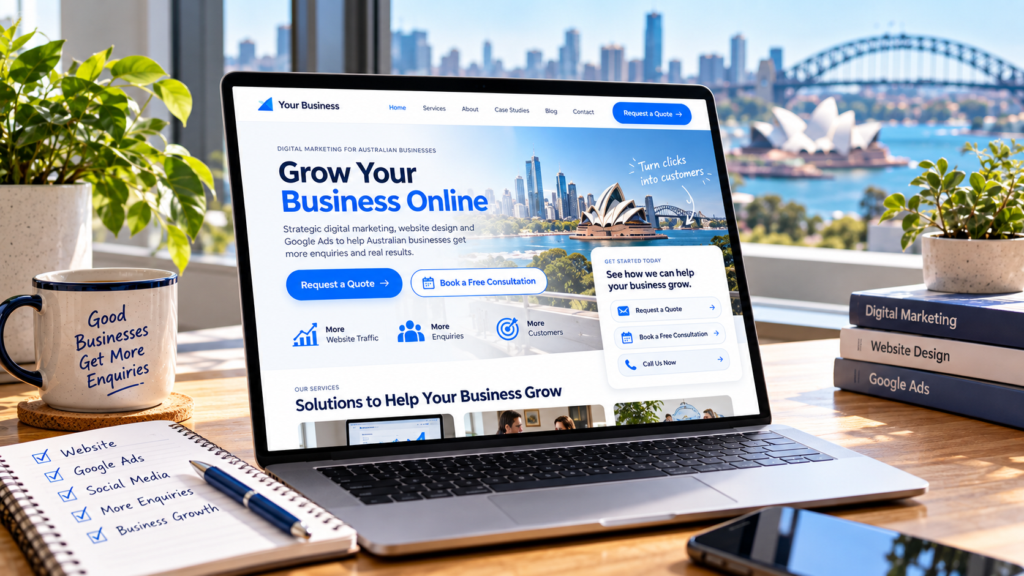
A well-planned homepage design can help businesses create a stronger first impression, communicate their value clearly, and build trust with potential customers from the moment they arrive on the site.
The difference is not simply visual. Strategic design decisions can significantly influence how users interact with your website and whether they choose to become customers.
Conversion Challenges Often Go Unnoticed
One of the biggest misconceptions about websites is that traffic alone leads to business growth.
In reality, the ability to convert visitors into enquiries, leads, or customers is what truly matters.
Many DIY websites focus heavily on appearance while giving less attention to conversion strategy. Important elements such as call-to-action placement, content hierarchy, trust signals, and user journeys may not receive the attention they deserve.
Even small issues can create friction that prevents visitors from taking action.
Similarly, businesses often create individual service pages or a dedicated landing page without considering how those pages guide users toward a desired outcome.
Professional website support helps identify and eliminate these barriers, improving conversion performance over time.
SEO Flexibility Can Be Restricted
Search engine optimisation is one of the most valuable long-term marketing investments a business can make.
While many DIY website platforms include basic SEO features, they often limit access to more advanced functionality.
Technical SEO elements such as schema markup, page speed optimisation, custom redirects, indexing controls, structured content, and advanced analytics may be difficult to implement effectively.
As competition increases, these limitations become more significant.
Businesses investing in content marketing, local SEO, or broader digital marketing strategies need a website that supports their efforts rather than restricting them. A strong SEO foundation plays an important role in achieving long-term business growth, helping businesses attract qualified traffic and remain competitive over time.
A professionally developed website provides greater flexibility to implement SEO best practices and adapt to changing search engine requirements.
This becomes particularly important for businesses operating in competitive industries where small performance improvements can generate substantial results.
Website Performance Affects User Experience
Modern users have high expectations.
Visitors expect websites to load quickly, function flawlessly across devices, and provide a smooth browsing experience.
Even a few seconds of delay can increase bounce rates and reduce conversions.
DIY website platforms often prioritise convenience over performance. The use of template-based systems, multiple plugins, and shared infrastructure can affect website speed and responsiveness.
As a website grows and additional functionality is added, these issues may become more noticeable.
Website performance also influences search rankings. Search engines increasingly consider user experience metrics when evaluating websites.
Professional optimisation can improve loading times, streamline code, and enhance overall website performance, helping businesses provide a better experience for both users and search engines.
Scalability Becomes More Difficult
Growth usually creates complexity.
A business that once offered a handful of services may eventually manage dozens. Product catalogues expand. Team members increase. Marketing campaigns become more sophisticated.
Unfortunately, many DIY website platforms struggle to support these evolving requirements efficiently.
Adding new functionality can require workarounds, third-party applications, or compromises that create additional maintenance challenges.
Over time, the website can become difficult to manage, slowing down operations and creating unnecessary frustration.
Businesses that anticipate growth often benefit from a website foundation designed to scale alongside their goals rather than one that requires constant adaptation.
Security and Maintenance Require Ongoing Attention
Many business owners assume that once a website is launched, the work is complete.
In reality, websites require ongoing attention to remain secure, functional, and effective.
Software updates, plugin management, security monitoring, backups, performance optimisation, and content updates all play important roles in maintaining a healthy website.
According to Mailchimp’s guide on maintaining a business website, regular maintenance helps improve performance, security, user experience, and search visibility.
Unfortunately, website maintenance is often overlooked when businesses rely on DIY solutions.
As responsibilities grow, website upkeep can easily fall to the bottom of the priority list.
Professional website maintenance ensures critical updates are managed consistently, reducing risk and helping businesses avoid costly issues before they occur.
Integrations Become Increasingly Important
Today’s businesses rarely operate using a website alone.
Customer relationship management systems, email marketing platforms, analytics tools, booking software, payment gateways, inventory management systems, and automation platforms often work together to support growth.
DIY website builders may offer integrations, but they are not always flexible enough to accommodate specific business requirements.
As a result, businesses may find themselves relying on manual processes that consume valuable time and increase the likelihood of errors.
Professional website development enables businesses to connect systems more effectively, creating streamlined workflows that improve efficiency and customer experiences.
These operational improvements can become significant competitive advantages over time.
Data and Insights Are Often Underutilised
Growing businesses rely on data to make informed decisions.
Understanding how visitors interact with a website can reveal valuable opportunities for improvement.
Which pages generate the most leads? Where are visitors leaving? Which marketing channels drive the highest-quality traffic?
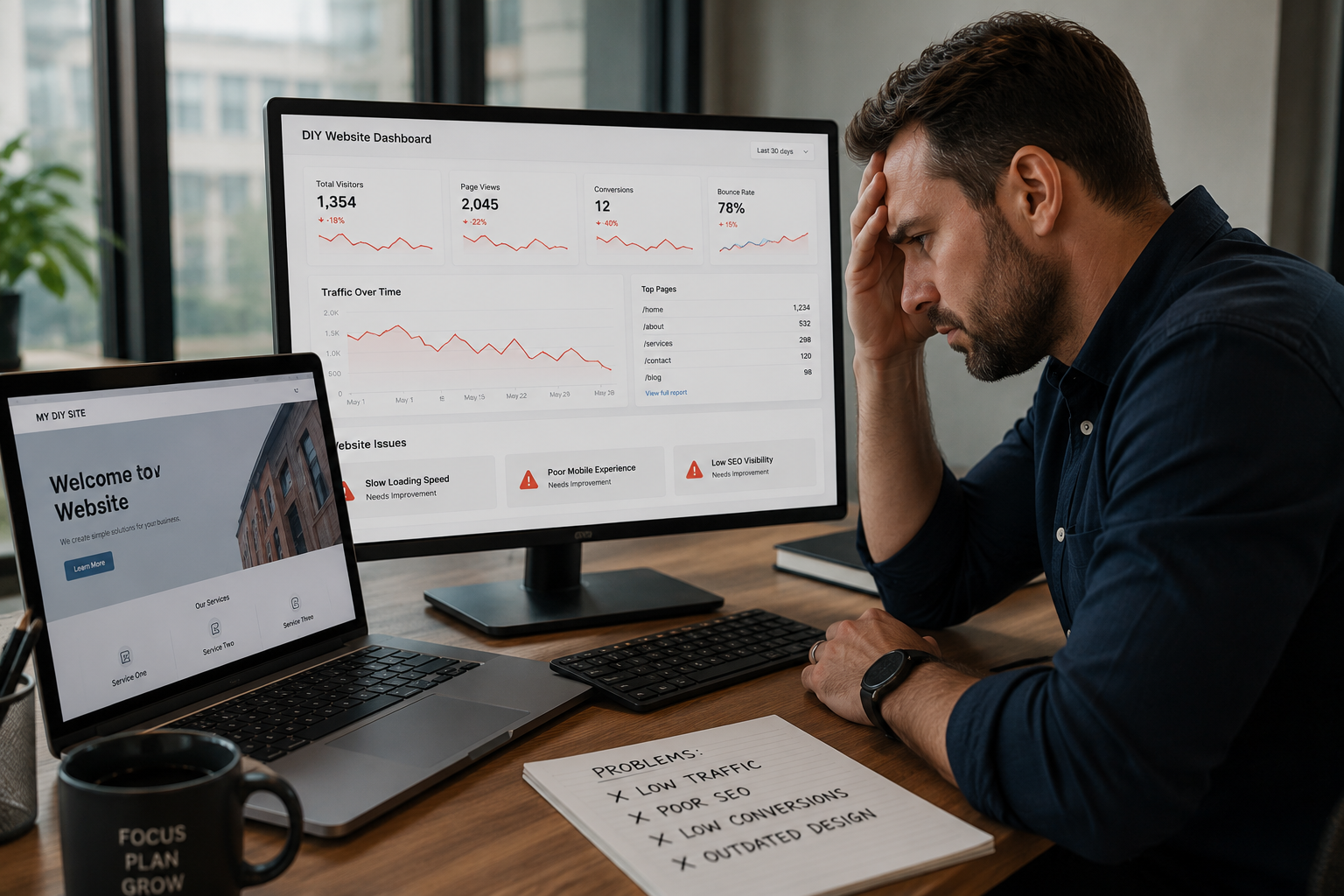
DIY websites often include limited reporting capabilities, making it harder to gain meaningful insights.
Without proper tracking and analysis, businesses may miss opportunities to improve performance and increase return on investment.
Professional website support includes implementing advanced analytics and conversion tracking that provide clearer visibility into website performance.
This allows businesses to make decisions based on evidence rather than assumptions.
Customer Expectations Continue to Rise
Customer expectations are constantly evolving.
A website that felt modern a few years ago may now appear outdated or difficult to use.
Consumers increasingly compare experiences across industries. If they can easily navigate one website, they expect similar convenience elsewhere.
A DIY website may struggle to keep pace with changing expectations around design, accessibility, mobile usability, and functionality.
Professional support helps businesses continuously improve their websites to align with evolving customer needs.
This ongoing optimisation contributes to stronger customer experiences, increased trust, and improved business outcomes.
The Hidden Cost of DIY Websites
One reason many businesses choose a DIY website is cost savings.
However, focusing solely on upfront costs can be misleading.
The real cost of a website includes lost opportunities, reduced conversions, limited scalability, time spent troubleshooting issues, and missed growth potential.
Business owners often invest countless hours managing website challenges themselves. That time could be spent serving customers, developing new opportunities, or focusing on strategic growth initiatives.
When viewed through this lens, professional website support often delivers significant value by helping businesses avoid costly limitations and achieve better results.
Why Professional Website Support Matters
Professional website support goes beyond simply building a website.
It involves creating a platform that aligns with business objectives, supports marketing efforts, delivers positive user experiences, and adapts as requirements evolve.
This includes reliable website hosting, ongoing optimisation, strategic design improvements, technical support, and performance monitoring.
The goal is not just to maintain a website but to help it become a valuable business asset.
For growing businesses, having access to experienced website professionals can reduce risk, improve performance, and create opportunities for long-term success.
Many businesses also find reassurance in reviewing client reviews and success stories to see how professional website solutions have supported growth for organisations facing similar challenges.
Understanding DIY Websites
Is a DIY website bad for small businesses?
Not necessarily. A DIY website can be a practical starting point for new businesses with limited budgets. The challenge arises when growth creates requirements that exceed the platform’s capabilities.
When should I upgrade from a DIY website?
Signs include slow website performance, limited functionality, poor conversion rates, difficulty implementing marketing initiatives, and increasing maintenance challenges.
Can a DIY website rank on Google?
Yes. Many DIY websites can achieve search visibility. However, advanced SEO opportunities may be limited compared to professionally developed websites that provide greater flexibility and optimisation options.
Is professional website development worth the investment?
For many growing businesses, the answer is yes. Professional website development can improve user experience, conversion rates, scalability, performance, and long-term return on investment.
How important is website maintenance?
Very important. Ongoing maintenance helps protect security, improve performance, and ensure your website continues to support business objectives effectively.
The Bottom Line
A DIY website can be a useful starting point, but it is rarely the ideal long-term solution for a growing business.
As customer expectations increase and digital competition becomes more intense, businesses need websites that do more than simply look presentable. They need websites that support marketing strategies, convert visitors into customers, integrate with business systems, and scale alongside growth.
The limitations of a DIY website are not always obvious at first. However, over time, they can affect performance, efficiency, customer experience, and revenue potential.
Professional website support provides the expertise, flexibility, and strategic guidance needed to turn a website into a genuine growth asset. For businesses looking to move beyond the constraints of a DIY website, investing in the right support can create measurable advantages that contribute to long-term success.
If you’re ready to move beyond the limitations of a DIY website and build a stronger foundation for growth, contact us to discuss the right solution for your business.