For many Australian businesses, having a professional website is an essential part of attracting customers, generating enquiries, and building credibility online. Whether a business is launching a new website or replacing an outdated one, choosing the right solution can have a significant impact on future growth.
Businesses exploring website design and development options are often faced with an important decision: should they invest in a custom website or use a website builder?
Website builders have become increasingly popular because they offer an affordable and accessible way to get online quickly. At the same time, custom websites continue to be a preferred choice for businesses looking for greater flexibility, functionality, and long-term scalability.
The right choice depends on a range of factors, including budget, business goals, growth plans, and marketing requirements. Understanding the differences between these two approaches can help Australian businesses make a more informed decision.
Custom Website vs Website Builder: Understanding The Difference
Before comparing the advantages and disadvantages of each option, it is important to understand how they differ.
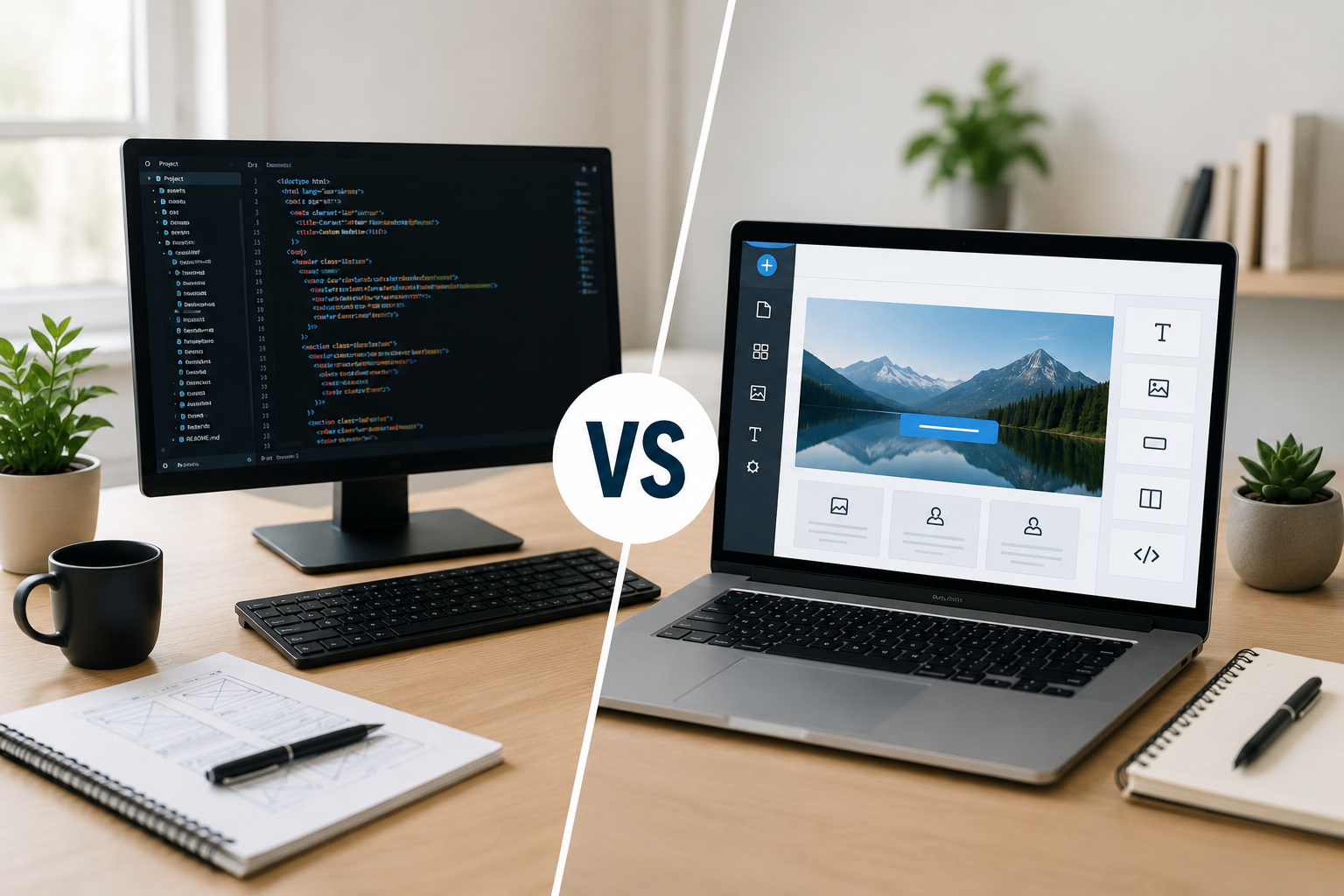
A website builder is a platform that allows users to create websites using pre-designed templates and drag-and-drop functionality. Popular examples include Wix, Squarespace, Shopify, and Weebly. These platforms are designed to simplify website creation and reduce the need for technical knowledge.
A custom website, on the other hand, is designed and developed specifically for a business. Rather than working within the limitations of a template, a custom website can be tailored to meet unique business requirements, branding guidelines, and functionality needs.
The decision between a custom website and a website builder is similar to choosing between a ready-made solution and a tailored solution. Both can be effective in the right circumstances, but they serve different purposes.
Many businesses also find themselves deciding between a website or a landing page when planning their online presence. While landing pages can be effective for specific campaigns, businesses looking to establish a strong long-term digital presence often require a website that can support multiple goals, services, and customer journeys.
Understanding these differences provides a useful foundation for evaluating which option may be the best fit for your business.
The Benefits Of Website Builders For Some Businesses
Website builders offer several advantages, particularly for startups, sole traders, and small businesses looking to establish an online presence without a significant upfront investment.
One of the biggest benefits is affordability. Many website builder platforms offer subscription-based pricing models that allow businesses to launch a website quickly and at a relatively low cost.
Website builders also provide convenience. Templates, built-in design tools, and guided setup processes make it possible to create a functional website without extensive technical knowledge.
According to Forbes, small business website design decisions often involve balancing affordability, ease of use, and long-term business requirements. For businesses seeking a simple online presence, website builders can provide a practical starting point.
Another advantage is speed. Businesses can often launch a website within days rather than weeks, making website builders attractive for organisations with limited timeframes.
Many website builders also include hosting, security updates, and maintenance as part of their subscription plans. This can reduce the complexity associated with managing a website.
For businesses that need a simple brochure website, portfolio, or temporary online presence, a website builder may provide sufficient functionality.
However, while website builders can offer convenience and affordability, they may not always provide the flexibility required as a business grows.
Common Challenges Businesses Experience With Website Builders
Although website builders can be effective for some businesses, challenges may emerge as requirements become more sophisticated.
One common issue is limited design flexibility. While templates can help businesses launch quickly, they may also make it difficult to create a distinctive online presence. In competitive markets, businesses often want their websites to reflect their unique brand identity and stand out from competitors.
Functionality can also become a challenge. As businesses grow, they may require advanced booking systems, custom integrations, membership areas, customer portals, or specialised functionality that may not be easily supported within some website builder platforms.
Search engine optimisation can be another consideration. While most website builders provide SEO features, businesses seeking more control over website structure, technical optimisation, and performance may encounter limitations.
This is one reason many businesses discover that DIY websites that worked during their early stages may no longer support their long-term goals. As marketing requirements evolve, businesses often need greater flexibility to support lead generation, content marketing, and ongoing growth strategies.
Scalability is another factor. What works for a small business today may not provide the same value in three or five years. Businesses should therefore consider not only their current needs but also their future plans when selecting a website platform.
How Custom Websites Support Long-Term Business Growth
For many Australian businesses, a website is more than an online brochure. It is an important business asset that supports marketing, lead generation, customer engagement, and long-term growth.
Custom websites provide businesses with greater flexibility because they are built around specific business requirements rather than predefined templates.
This flexibility allows businesses to create unique user experiences, stronger branding, and more effective customer journeys. Every element of the website can be designed to support business objectives and improve the experience for visitors.
Custom websites can also support more advanced functionality. Businesses can integrate customer relationship management systems, booking platforms, payment gateways, membership portals, and other tools that support operational efficiency and customer engagement.
Another advantage is scalability. As business requirements evolve, custom websites can often be expanded and adapted without the same restrictions that may exist within website builder platforms.
This can be particularly valuable for businesses investing in SEO, digital marketing, and long-term growth strategies. A custom website provides greater freedom to implement changes, add functionality, and optimise performance over time.
For businesses focused on growth, these advantages can help create a stronger foundation for future success.
Comparing Cost, Performance, And Long-Term Value
Cost is often one of the biggest factors influencing website decisions.
At first glance, website builders may appear to be the more affordable option. Monthly subscription fees can be lower than the upfront investment associated with a custom website.
However, evaluating value requires looking beyond initial costs.
Website builders generally have lower upfront costs because they operate on subscription-based pricing models. This can make them an attractive option for startups, sole traders, and businesses with limited budgets that need a website quickly.
It is also important to consider the total cost over time. Subscription fees, premium features, third-party integrations, additional storage, and other add-ons can increase ongoing expenses as business requirements grow. Custom websites typically require a larger initial investment, but they may offer greater flexibility, scalability, and control over future development.
Businesses should consider factors such as functionality, scalability, maintenance requirements, marketing performance, and future development needs. In some cases, a lower upfront investment may result in higher long-term costs if a business eventually needs to rebuild or replace its website.
Performance also plays an important role. Website speed, usability, mobile responsiveness, and overall user experience can influence how visitors interact with a website.
According to Google Search Central, page experience remains an important consideration when evaluating how users interact with a website. Performance and usability can influence both user satisfaction and overall website effectiveness.
Businesses should therefore consider how their chosen platform will support both current requirements and future growth objectives.
The most cost-effective solution is not always the cheapest option. Instead, it is often the option that delivers the greatest long-term value while supporting business goals.
Choosing The Right Website Solution For Your Business
There is no single solution that suits every business.
Website builders may be appropriate for:
- Startups
- Sole traders
- Temporary websites
- Portfolio websites
- Businesses with limited budgets
Custom websites may be more suitable for:
- Growing businesses
- Service-based businesses
- Businesses investing in SEO
- Businesses focused on lead generation
- Organisations requiring custom functionality
Business owners should also consider how their website contributes to marketing outcomes. Many organisations invest in attracting visitors but struggle to convert them into enquiries or customers.
If a business is experiencing challenges with website traffic but not generating enough enquiries, the issue may extend beyond the website platform itself. Factors such as user experience, messaging, calls to action, and conversion optimisation can all influence performance.
The most effective website solution is one that aligns with both business objectives and customer expectations.
Making The Right Website Investment
Choosing between a custom website and a website builder is not about finding a universally better option. It is about selecting the solution that best supports your business goals, budget, and future growth plans.
For some businesses, a website builder may provide an affordable and practical starting point. For others, investing in a custom website may offer greater flexibility, stronger branding opportunities, and the ability to support more advanced marketing and business objectives.
According to HubSpot, effective website management involves ongoing updates, maintenance, performance monitoring, and continuous improvements. Regardless of which platform is chosen, businesses that actively manage and improve their websites are often better positioned to achieve long-term results.
It is also important to remember that a successful website is about more than appearance alone. Features such as effective contact forms, clear calls to action, user experience, and content quality all contribute to how well a website supports lead generation and business growth.
Businesses should also consider how their website will support future marketing initiatives. As customer expectations evolve and digital competition continues to increase, a website often plays a central role in attracting visitors, building credibility, and generating enquiries. Choosing a solution that can adapt alongside the business may help avoid unnecessary redevelopment costs and limitations in the future.
Ultimately, the right choice depends on your specific circumstances. Some businesses may benefit from the simplicity and affordability of a website builder, while others may require the flexibility and scalability that a custom website can provide. By understanding the strengths and limitations of both approaches, Australian businesses can make more informed decisions and invest in a website that supports both their current needs and long-term growth objectives.
What Businesses Often Ask About Website Solutions
Is a custom website better than a website builder?
Not necessarily. The best solution depends on your business goals, budget, and future growth plans. Website builders can work well for simple websites, while custom websites often provide greater flexibility and scalability.
Are website builders suitable for small businesses?
Yes. Many small businesses successfully use website builders, particularly when they require a simple online presence and have limited budgets.
Can a custom website support SEO?
Custom websites often provide greater flexibility when implementing SEO strategies. Businesses may have more control over technical optimisation, site structure, and user experience.
What are the main limitations of website builders?
Common limitations may include reduced design flexibility, restricted functionality, platform dependency, and scalability challenges.
When should a business consider moving to a custom website?
Businesses may consider moving to a custom website when they require advanced functionality, stronger branding, improved flexibility, or greater support for long-term growth strategies.
Need Help Choosing The Right Website Solution?
Whether you are launching a new website, replacing an outdated one, or considering a move away from a website builder, selecting the right solution can have a significant impact on your business’s online performance and future growth.
If you would like guidance on the best approach for your business, get in touch with our team today.